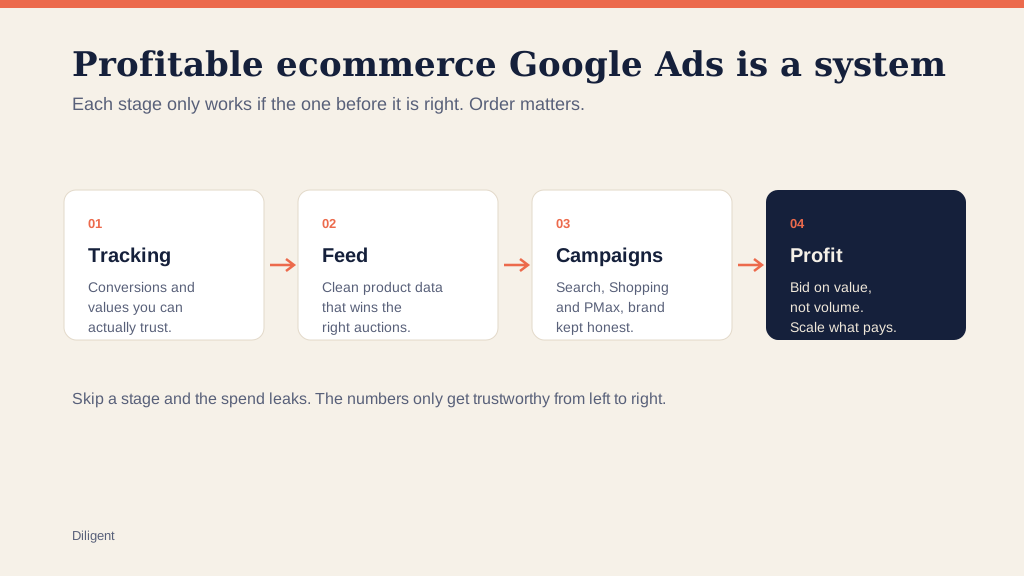
Google Ads can be the most profitable channel an ecommerce brand runs, or the fastest way to set money on fire, and the difference is rarely the bids. It is whether the account is built as a system. Most struggling accounts we audit are not missing some clever tactic. They are missing a foundation: trustworthy tracking, a clean feed, a sane campaign structure, and a bidding goal tied to profit instead of clicks. Get those four right, in order, and the results follow without heroics. Get them wrong and no bid adjustment will save you, because you are scaling a leak.
This guide walks through that system in the order it has to be built, with links to the deeper pieces on each part. It is the same order we use when we take over an ecommerce account, and the same order we would tell you to use if you ran it yourself.
Is Google Ads worth it for ecommerce?
Yes, when the intent and the economics line up, and Google Ads is built for both. Shopping and Search put your products in front of people at the exact moment they are looking to buy, which is why search-driven campaigns tend to return more per dollar than most other channels. Someone typing "28cm non-stick ceramic pan" has already decided what they want; you are competing for a sale, not creating demand from scratch. That is a structurally easier job than interrupting someone on a social feed.
The honest caveat is that a good return depends entirely on your margins, not on an industry average. WebFX's 2025 paid-search analysis puts the broad Google Ads ROAS average near 2x and ecommerce retail closer to 1.73x (WebFX, Average ROAS by Industry), but a blended number averaged across brands running 10% to 80% margins tells you almost nothing about your own account. Before you judge any of this, work out your break-even point, which we cover in what counts as a good ROAS for ecommerce. Once you know the number you have to beat, everything below is about beating it reliably.
How much do you need to spend, and how fast can you scale?
Enough to clear the learning phase on your priority campaigns, and then scaled in steps rather than leaps. Smart Bidding needs a steady flow of conversions to learn from before it stabilizes, so a budget spread too thin to produce that flow leaves every campaign permanently half-trained. The usual budgeting mistake we see is not spending too much. It is spreading a small budget across Search, Shopping, Performance Max and Demand Gen all at once, so none of them ever gets enough data to work.
The discipline is to start where intent is highest, fund it properly, and add channels as each one earns the right. When you scale a winner, move in increments of roughly twenty to thirty percent at a time and let the bidding re-settle between moves, because a sudden budget jump can throw a campaign back into learning and undo a month of progress. Patience here is not passivity. It is refusing to hand the algorithm a problem it cannot solve, which is what an underfunded, over-fragmented account is.
Get the tracking right before you scale anything
This is first for a reason. Every decision the account makes, and every decision the bidding algorithm makes, runs on your conversion data. If that data is wrong, you scale the wrong thing with total confidence. We routinely find ad-platform and analytics numbers that disagree with the store's backend by double digits, and on one account we took over the gap between what was reported and what actually happened was roughly 50%, the story behind our measurement rebuild playbook. A gap that size does not just misreport results. It misdirects the entire budget, because the campaigns that look like winners are not the ones actually making money.
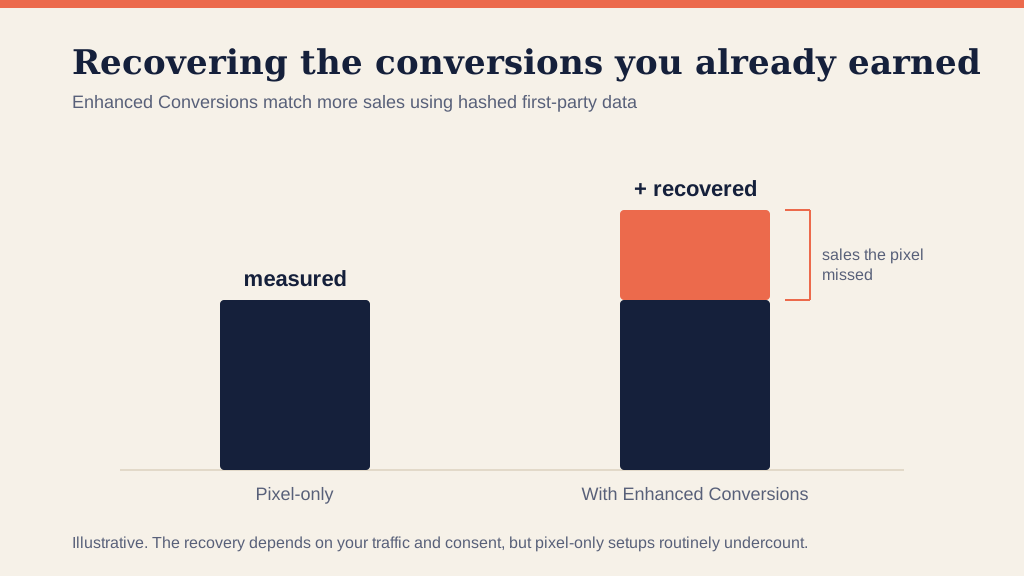
The fix is boring and decisive. We reconcile three numbers until they agree: what Google Ads reports, what GA4 reports, and what the store's own order system records. A tag that fires is not the same as a tag that reports correctly, and the difference is invisible until you check it against real orders. That means clean conversion tracking, analytics you can act on through a properly built GA4 setup, and a web analytics foundation that survives privacy features and ad blockers. Increasingly that last part means moving measurement server-side, so the conversions a browser pixel would lose still reach the platform. A bidding strategy pointed at a bad signal optimizes confidently toward the wrong outcome, every time.
The feed is your foundation
For an ecommerce account, the product feed is not a setting, it is the heart of the account. Shopping and Performance Max read your feed to decide which searches your products can show for, so a thin or messy feed caps everything no matter how much budget you add. The first thing we check on a new account is the disapproval rate in Merchant Center, because the feeds we inherit run anywhere from a quarter to nearly all of their products disapproved, and a disapproved product is paid-for inventory that cannot show. Clearing those disapprovals is often the single biggest immediate win in the whole account, ahead of any bidding change, and it is the foundation of our feed health work.
Once the catalog can show, the work is making it show for the right searches. The highest-impact field is the product title, because Google leans on it to match queries. A title like "Ceramic Pan" competes for almost nothing; a title that leads with brand, type and the attributes people actually search, such as "Jean Patrique 28cm Non-Stick Ceramic Frying Pan," is eligible for far more high-intent queries. Front-load the important words, because Google typically shows only about the first 70 characters before it truncates. Then add custom labels that tag margin and bestsellers, so you can push budget toward the products that make money instead of treating every SKU the same. The full method is in Google Shopping feed optimization, and we run it as a managed feed service.
Which campaign types do you actually need, and in what order?
You do not need every campaign type on day one. You need the right ones in the right order. Start where the intent is highest and widen as the data earns it.
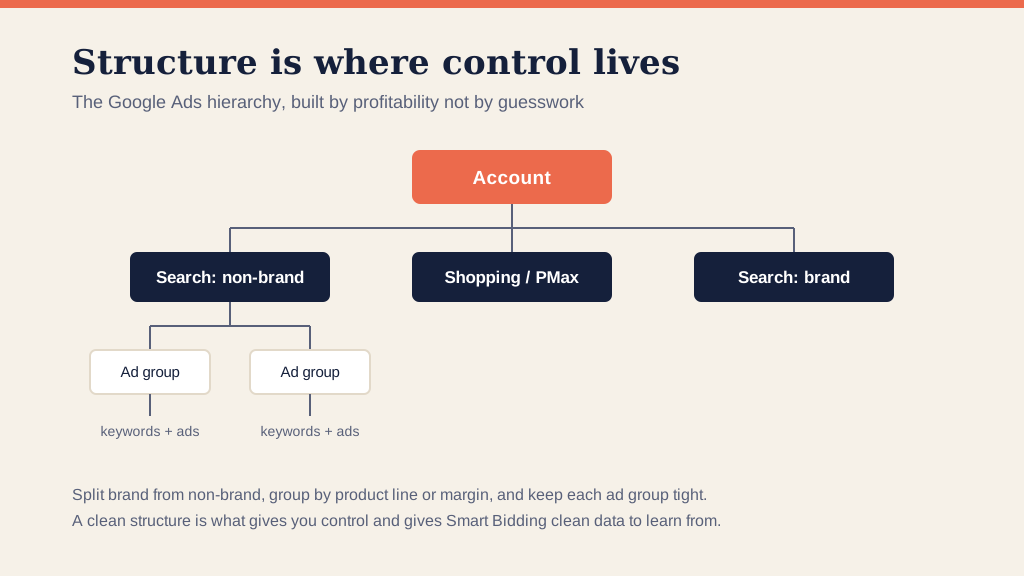
- Shopping and Performance Max carry most ecommerce accounts, because they put products in front of active shoppers across Google. Built feed-first they scale well, which is what Performance Max for ecommerce and our Shopping and PMax service are built for.
- Brand Search protects the demand you already created, cheaply and at high return. On the accounts in our brand defense playbook, brand Search holds around 15x ROAS at close to 90% impression share. It should be its own campaign so it never flatters your acquisition numbers, and it is worth defending because competitors will bid on your name and skim the cheapest, highest-intent clicks you own if you let them.
- Non-brand Search is where real growth lives and where most budget leaks. Won properly it stands on its own: one sleep-category account we run is entirely non-brand and review intent and still holds around 8.8x ROAS, the case we lay out in making non-brand pay. Judge it against a target that clears your margin, never against your brand ROAS.
Add channels as each one proves out, rather than spreading a small budget thin across all of them on day one. The order is intent-first because the high-intent campaigns generate the conversion data the lower-intent ones need to learn from.
Bid on value, not volume
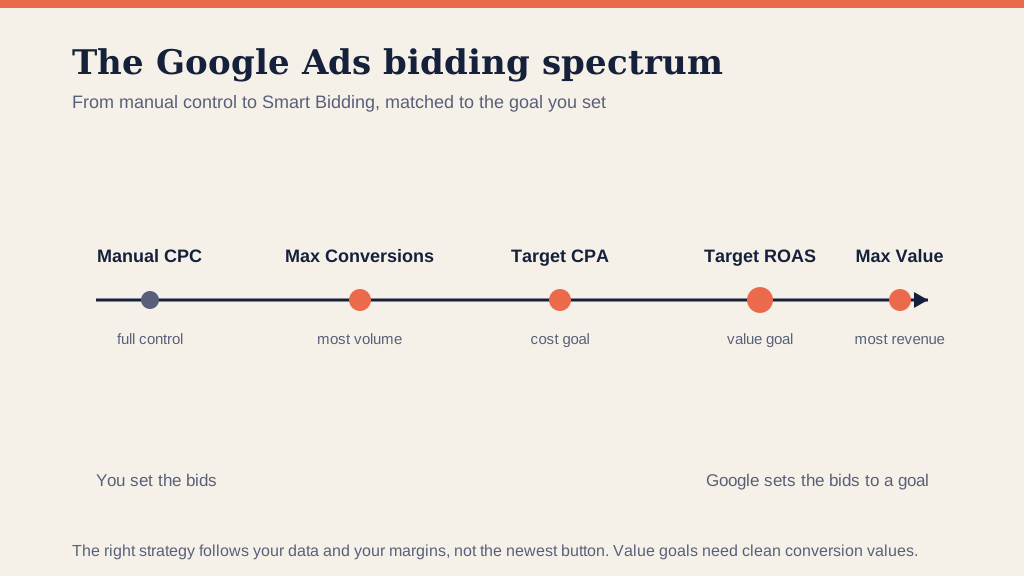
The default most accounts get stuck on is Maximize Conversions, which buys the cheapest conversions it can find and tilts your spend toward discount hunters and single-item orders. The fix is to tell Google what a sale is actually worth and bid to a Target ROAS that reflects it. On the accounts in our value-based bidding playbook, that shift took Search campaigns from a sub-1x baseline that lost money to 4.4x on the same budget, with value-bidding ROAS climbing +234% as the strategy matured. We have replicated the same move on two more accounts for +161% and +121% Search ROAS. The lever was not more spend. It was changing what the account optimized for.
It only works in the right order, and the order is the whole trick. First confirm the conversion values flowing into the account are real. Then move to Maximize Conversion Value with no target, so the system learns where the revenue is. Only then layer in a Target ROAS built from the account's own numbers, and tighten it a few points at a time. Set that target too high on day one and spend collapses; seed it from reality and the same budget starts buying revenue instead of conversion count. A value strategy launched on broken tracking will optimize harder toward the wrong number, which is exactly why measurement comes first.
Cut the wasted spend
Even a well-built account leaks, and the most reliable place to find money is the search terms report. The overwhelming majority of the queries an account triggers on never convert; across the accounts in our wasted-spend playbook it is on the order of 99%, and we maintain over 850,000 negative keywords doing nothing but keeping budget off the queries that do not pay. Mining those terms weekly and building out negatives is grunt work, and it compounds: every junk query you exclude this week is budget that funds a converting one next week. The gap between a groomed account and a neglected one is mostly the negatives someone did or did not add.
How long until Google Ads turns a profit?
Usually a few months, because the first weeks are the algorithm learning, not the channel delivering its verdict. The single most expensive mistake in Google Ads is judging a campaign inside its learning phase, panicking at week two, and reverting right before the climb. Performance Max is the clearest example: on a beauty brand we manage it launched below 1.5x ROAS in its first year and matured into one of the account's most profitable channels, ending +153% above its launch year, the curve we document in the Performance Max ramp playbook. The accounts that win agree the judgement window up front, six to eight weeks rather than six to eight days, and hold the line when the early numbers look bad.
The other half of the answer is that profit, once reached, does not hold itself. A Google Ads account runs in a moving market, and left alone it drifts: waste accumulates, targets go stale, competitors take the cheap conversions you used to win. On the cleanest test we have, an account we built and scaled, handed in-house for a year, and then resumed, ROAS recovered +43% the year active management came back, which is the case behind what active management is worth. The first months build the profit; the steady work keeps it.
Where ecommerce Google Ads goes wrong
Most of the damage we are called in to fix comes from a short list of repeatable mistakes, not exotic ones. Knowing them is half the battle.
- Scaling on bad data. The account looks healthy because the reports say so, but the reports are off by a fifth or a half, so budget flows to phantom winners. Fix measurement before you touch bidding.
- Migrating on a broken feed. Moving Standard Shopping to Performance Max while a third of the catalog is disapproved just hides the problem behind a blacker box. Clean the feed first.
- Judging in the learning phase. A campaign assessed at four weeks is assessed mid-education. Pulling budget then guarantees you never reach the part of the curve where it pays.
- Hiding behind blended ROAS. A healthy blended number can be carried entirely by brand while non-brand bleeds underneath it. Always split brand from non-brand before you decide anything.
- Letting Performance Max eat your brand. Without brand exclusions, PMax serves on cheap brand queries and reports a flattering ROAS that is really demand you already owned.
- Set-and-forget. Automation is a tool inside active management, not a replacement for it. The accounts that slide are the ones that mistook Smart Bidding for a reason to stop paying attention.
What good looks like
When the system is built in order, the results follow without heroics. We took a kitchenware brand that had never run Google Ads and grew it every year through the launch climb, with year-on-year conversions up sharply. We scaled a beauty brand's spend close to 9x while holding its ROAS steady from a standing start. Neither came from a trick. Both came from tracking, feed, structure and value bidding, done in the right order, which is how we run Google Ads as an agency.
Frequently asked questions
Is Google Ads better than Facebook for ecommerce? They do different jobs, and the strongest accounts run both. Google captures demand that already exists, so it tends to return more per last-click dollar; Meta creates demand and fills the top of the funnel. Judging them against each other on platform ROAS alone is misleading, because both over-claim and the tracking under them leaks, which is why we watch the whole business through MER as well as ROAS.
Should I run Standard Shopping or Performance Max? Performance Max for most catalogs, but only after the feed is clean, and Standard Shopping still has a place when you want granular control over which products show for which queries. The decision is about how much control you are willing to trade for automation, and it should never be made on a broken feed.
Do I need a big budget to start? No, but you need enough to let your priority campaigns clear the learning phase, and you need the discipline not to fragment it across every campaign type at once. A focused small budget beats a scattered larger one.
How do I know my account is being managed well? Look for the boring signals: search terms pruned into negatives every week, bidding targets revisited as margins move, brand and non-brand reported separately, and the feed maintained rather than uploaded once. Drama is usually a sign of neglect followed by panic, not of good management.
The short version
- Google Ads rewards ecommerce when it is built as a system, not a pile of tactics. Order matters.
- Fix tracking first, because every later decision runs on that data.
- The feed is your foundation in Shopping and Performance Max. Clean it before you scale.
- Add campaign types in order of intent, bid on value not volume, and mine search terms to stop the leaks.
- Give it the months it needs to leave the learning phase, then keep working it so it does not drift. Know your break-even ROAS so you can tell, at a glance, whether any of it is working.