Every Google Ads account rests on a bidding strategy, and it is one of the settings people get wrong most often. Pick the one that does not fit your data or your margins and you can pour budget into cheap clicks that never turn into profit. Pick the right one, fed with clean data, and the same budget starts chasing revenue instead of volume. This guide walks the main strategies, what each one optimizes for, and how to choose.
The short version
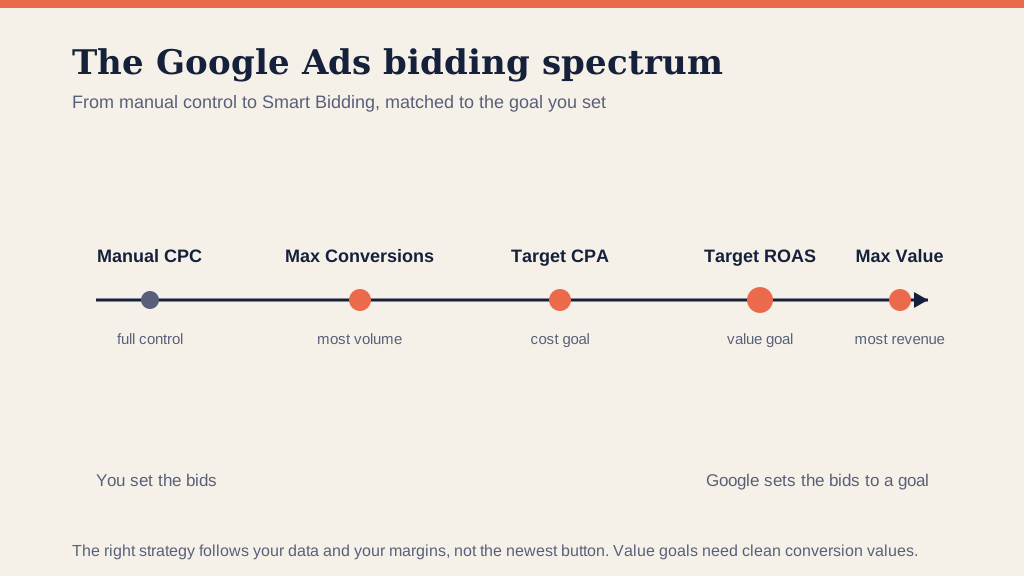
- Google Ads bidding runs on a spectrum, from Manual CPC where you set every bid to Smart Bidding where Google bids to a goal you choose.
- The automated goals are Maximize Conversions (count), Target CPA (cost per conversion), Target ROAS (return on spend), and Maximize Conversion Value (revenue).
- For ecommerce, value-based goals usually win, because they chase the high-value sales rather than the cheapest actions.
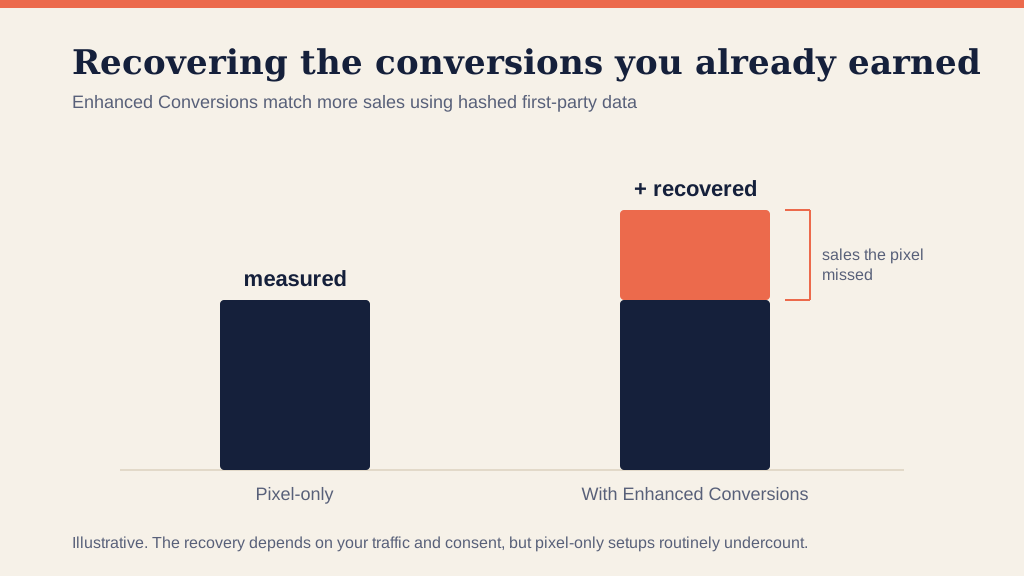
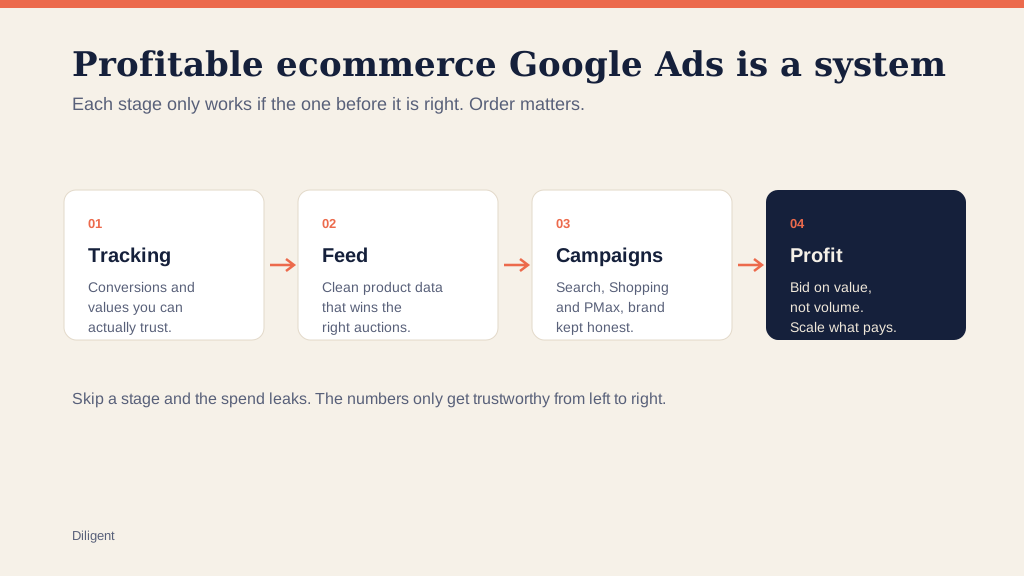
- Every automated strategy is only as good as the conversion data under it, so fix tracking before you touch the bid strategy.
- Start a new campaign on volume, let it learn, then move to a value goal once the data is there.
What are the Google Ads bidding strategies?
Google Ads gives you two broad choices: set bids yourself, or let Google's Smart Bidding set them at auction time toward a goal. Manual CPC is the fully manual option. Everything else is automated, and the automated strategies differ only in what you tell them to value.
The four automated goals worth knowing are Maximize Conversions, Target CPA, Target ROAS, and Maximize Conversion Value. Choosing between them is really choosing what you want Google to optimize toward: more conversions, a cost per conversion, or revenue.
Manual CPC: full control, no reflexes
Manual CPC lets you set the bid on every keyword yourself. You get total control, which sounds appealing, but you cannot adjust a bid the instant a high-intent shopper searches at 9pm on a mobile in a buying mood. Smart Bidding can, because it reads signals at auction time that a human never sees.
For a handful of keywords on a tiny budget, or a tightly controlled test, manual still has a place. For a real ecommerce account, hand-set bids leave money on the table.
Maximize Conversions: volume first
Maximize Conversions tells Google to get you as many conversions as it can for your budget. It is a good way to start a new campaign, because it gathers the conversion data the smarter strategies need to learn from.
The catch is that it optimizes for the count, not the value. It will happily buy ten cheap conversions over three valuable ones, because to the algorithm they all look the same. For a store where a 20 order and a 200 order are both just a conversion, that is a problem waiting to happen.
Target CPA: a cost goal
Target CPA (now folded into Maximize Conversions with a target) bids to hit an average cost per acquisition you set. It is more disciplined than raw volume, because it holds the price of a conversion, but it shares the same blind spot: it treats every conversion as equal regardless of what it is worth.
Target CPA suits lead generation, where most leads are worth roughly the same. For ecommerce with a real spread of order values, a cost goal keeps steering you toward the cheap sale.
Target ROAS: a value goal
Target ROAS bids to a ratio of revenue to spend that you set. Instead of chasing the cheapest conversion, it chases the return, so it leans into the products and shoppers that bring more money back. For most ecommerce accounts, this is the strategy that fits.
It has one hard requirement: real conversion values have to be flowing into the account. Feed it accurate revenue and it becomes the lever that scales profitably. Feed it nothing, or guessed values, and it flies blind. Set a target far above anything the account has ever done and it throttles spend to almost nothing. This shift, from a cost goal to a value goal, is the heart of our value-based bidding playbook.
Maximize Conversion Value: revenue first
Maximize Conversion Value is Target ROAS without a fixed target: spend the budget to bring back as much revenue as possible. It is a strong choice when you want to use the whole budget and let Google find the revenue, then add a Target ROAS once you know the number the account can hold.
How do you choose a bidding strategy?
Match the strategy to the account's stage and data:
- New campaign with thin data. Start on Maximize Conversions to build up conversions.
- Enough conversions, values not trusted yet. Fix conversion tracking first, because every automated strategy is only as honest as the data under it.
- Clean values and ready to scale. Move to Maximize Conversion Value, then layer in a Target ROAS built from the account's own numbers, not an industry average.
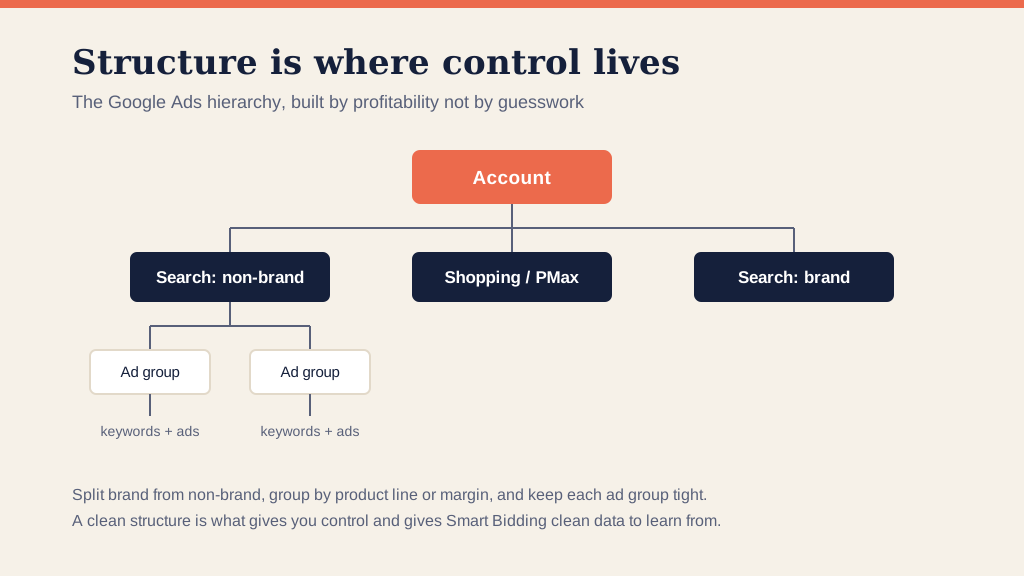
The mistake we see most is switching to a value goal before the values are real, or setting a target from a benchmark instead of the account. Ground the target in your break-even with the break-even ROAS calculator, and read the wider account picture in our Google Ads for ecommerce guide.
When should you switch bidding strategy?
Switch when the data supports it, not on a schedule. A campaign that has gathered a steady flow of conversions on Maximize Conversions is ready to move to a value goal. A campaign still learning is not, and every switch resets some of that learning, so change deliberately and give each strategy time to stabilize before you judge it.
Frequently asked questions
What is the best Google Ads bidding strategy for ecommerce? For most stores with clean revenue tracking, Target ROAS or Maximize Conversion Value, because they bid to the value of a sale rather than its count. But the best strategy depends on your data: a new campaign without enough conversions should start on Maximize Conversions and move to a value goal once it has learned.
What is the difference between Target CPA and Target ROAS? Target CPA bids to a cost per conversion, so it treats a 20 sale and a 200 sale as equally valuable. Target ROAS bids to a ratio of revenue to spend, so it chases the high-value sales. For ecommerce with a spread of order values, Target ROAS is usually the better fit, as long as real conversion values are flowing in.
Is Maximize Conversions good for ecommerce? It is a fine starting point while a campaign gathers data, but it optimizes for conversion count, not revenue, so it tends to buy the cheapest actions. Once you have enough conversions and trustworthy values, moving to Maximize Conversion Value or Target ROAS re-aims the same budget at profit.
How many conversions does Smart Bidding need to work? There is no hard rule, but Smart Bidding needs a steady flow of conversions to learn from before it stabilizes. Thin data makes it erratic, which is why very granular accounts can starve each campaign of signal. Give it enough volume, and clean values, before you judge it.
Should I use manual bidding in Google Ads? Rarely now. Manual CPC gives you full control but cannot react at auction time the way Smart Bidding can. It still has a place for tiny budgets or tight experiments, but for most ecommerce accounts an automated strategy fed with good data outperforms hand-set bids.
Bidding is where good data turns into profit, and where bad data turns into waste. If you would rather have the whole account structured, tracked and bid the right way, that is what our Google Ads management is built around.