Account structure is the least glamorous part of Google Ads and one of the most decisive. It is not about a clever setting; it is about organising the account so you can see what is working, control where budget goes, and feed the algorithm clean data. A messy account hides its own problems. A well-structured one shows you exactly where the money is made and lost. Here is how to think about it for ecommerce.
The short version
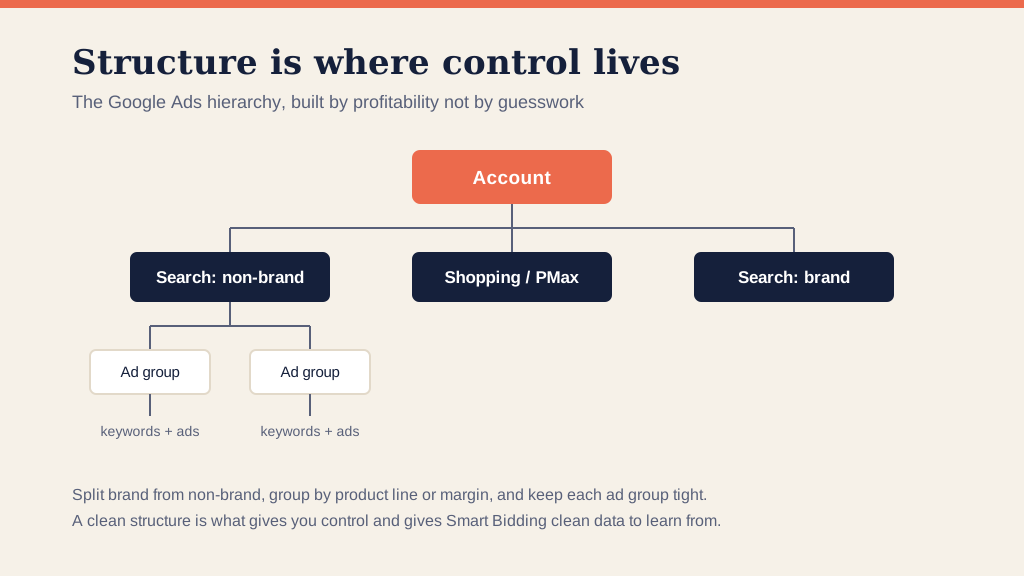
- A Google Ads account is a hierarchy: account, then campaigns, then ad groups, then keywords, ads and assets.
- Budget and bidding are set per campaign, so the split into campaigns is where you take control of the money.
- For ecommerce, separate brand from non-brand, run Shopping or Performance Max for the catalogue, and group by product line or margin.
- Keep ad groups tight so the search terms you pay for stay close to the keywords you chose.
- Good structure is not tidiness for its own sake; it is what gives you control and gives Smart Bidding coherent data.
The Google Ads hierarchy
A Google Ads account has four levels, and knowing what each one controls is the whole game:
- Account. The top level, holding everything, tied to your billing and your conversion tracking.
- Campaign. Where you set the budget, the bidding strategy, the network and the targeting. This is the lever that controls the money.
- Ad group. A tight theme inside a campaign, holding the keywords and the ads that match one intent.
- Keywords, ads and assets. The actual things that enter the auction and the creative shoppers see.
Because budget and bidding strategy live at the campaign level, the way you divide the account into campaigns is the way you divide control over your spend.
How to structure a Google Ads account for ecommerce
There is no single template, but the principles hold across ecommerce accounts.
- Split brand from non-brand. These are two different businesses. Brand is cheap demand you already own; non-brand is where growth comes from. Mixing them lets the efficient brand numbers hide weak prospecting.
- Run Shopping or Performance Max for the catalogue. For most stores this does the heavy lifting on product demand, driven by the feed, as covered in Performance Max for ecommerce.
- Group by product line or margin. Structure ad groups and asset groups around how the products actually differ in buyer and profitability, so budget concentrates where the margin is.
- Keep ad groups tight. The closer the keyword, the search term and the ad, the higher the relevance, which lifts Quality Score and lowers cost. The most granular version of this is single keyword ad groups.
The wider picture of how these pieces fit an ecommerce account is in our Google Ads for ecommerce guide.
Why structure is really about control
The reason structure matters is that it decides what you can see and what you can steer. When brand and non-brand share a campaign, you cannot bid them differently or judge them honestly, which is the point of our brand defense and non-brand prospecting playbooks. When a hundred loosely related keywords share an ad group, you cannot tell which one pulled the bad traffic, or write an ad that speaks to any of them.
Structure is also what makes negative keywords precise and gives Smart Bidding coherent data. Feed the algorithm one undifferentiated pile and it optimizes on noise; give it clean, themed campaigns and it learns faster.
Does structure still matter with Performance Max?
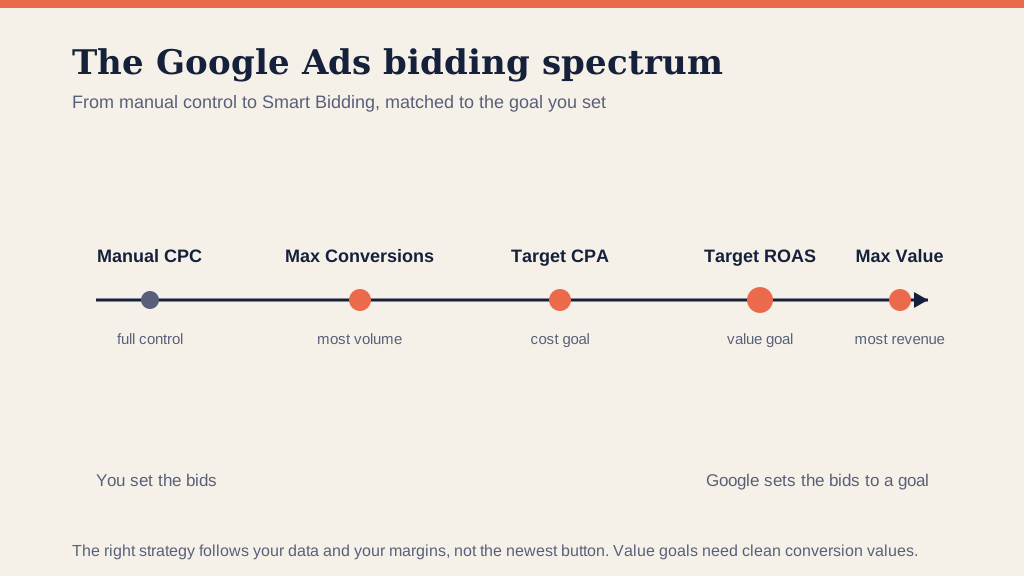
It does, just in a different shape. Even as Google automates more of the in-auction work, you still decide how to split brand from non-brand, how to group asset groups, what audience signals to feed, and what to exclude. The judgment moved up a level, from setting bids to structuring inputs, but it did not disappear. An account left entirely on defaults is an account you have handed over.
Frequently asked questions
What is the structure of a Google Ads account? A Google Ads account has a hierarchy: the account holds campaigns, campaigns hold ad groups, and ad groups hold keywords, ads and assets. Budget and bidding strategy are set at the campaign level, and relevance is controlled at the ad group level, so how you organise those layers decides how much control you have.
How should I structure a Google Ads account for ecommerce? Split brand from non-brand into separate campaigns, run Shopping or Performance Max for the catalogue, and group ad groups by product line or margin rather than dumping everything together. Keep ad groups tight so the search terms you pay for stay close to the keywords you chose.
Should brand and non-brand be separate campaigns? Yes. They have completely different economics: brand is cheap, high-converting demand you already own, and non-brand is the harder, growth traffic. Keeping them separate stops the efficient brand numbers from flattering the prospecting that needs real scrutiny, and lets you budget each on its own terms.
Does account structure still matter with Performance Max? Yes, just differently. Even with more automation, you still decide how to split brand from non-brand, how to group asset groups by product line or margin, and what to exclude. Structure is how you keep control and feed Smart Bidding clean, coherent data instead of one undifferentiated pile.
How granular should my ad groups be? Tight enough that the ad can speak to one intent, but not so fragmented that each group starves of data. Single keyword ad groups are the most granular approach; the right level balances relevance against giving Smart Bidding enough conversions in each group to learn from.
Structure is the quiet decision that everything else in the account inherits, for better or worse. If you would rather have it built and managed the right way from the start, that is what our Google Ads management is for.