
Maximize Conversions buys the cheapest action, not the best one.
Maximize Conversions is the default most accounts reach for, and for a brand-new account with no value data it's the right place to start. The problem is what happens when an account never graduates from it. The algorithm is told to buy as many conversions as the budget allows, and it has no idea that a one-item order and a full basket are worth very different amounts. So it chases whatever converts cheapest.
That sounds harmless until you watch where the money goes. Volume bidding tilts the account toward discount hunters and single-item orders, because those are the cheapest conversions to win. The conversion count on the dashboard climbs, everyone feels good, and revenue per dollar drifts the wrong way. The account looks busy and earns less.
We see the same pattern across very different businesses: a WordPress performance plugin, a beauty brand, a mattress and bedding retailer. Each had Search campaigns on volume bidding that were either losing money outright or leaving most of their revenue unclaimed. On one, the Maximize Conversions campaigns ran at a ROAS far below 1x: every dollar in returned less than a dollar of tracked revenue, month after month.
The fix has nothing to do with budget or new campaigns. You change what the account is told to optimize for, so the algorithm chases revenue instead of conversion count.
Earn the right to bid on value, then hand the algorithm a goal.
Value-based bidding only works if the values flowing into the account are real, so the migration is sequenced rather than flipped overnight. First we confirm the basics: conversion values pass correctly from the site into Google Ads, the right conversion action is set as primary, and there's enough recent conversion history for the strategy to learn from. Google's own guidance is to have a recent base of conversions and at least two distinct values before a value strategy can do anything useful.
Then we move from Maximize Conversions to Maximize Conversion Value, which tells the system to chase total revenue instead of a flat count. Only once that's stable, and the account has held revenue at the new objective, do we add a Target ROAS built from the account's real economics. Set it too high on day one and the system stops spending; set it from the account's true numbers and it spends into the revenue you want.
The order matters because a value strategy launched on bad data will optimize confidently toward the wrong outcome. We would rather spend a week making the data trustworthy than a month explaining a strategy that learned from noise. This is the same discipline behind our Google Ads management. We change the bidding strategy last, because it only amplifies what the measurement under it says.
- Verify conversion values are accurate
- Migrate to Maximize Conversion Value
- Layer in a realistic Target ROAS
What moved the number.
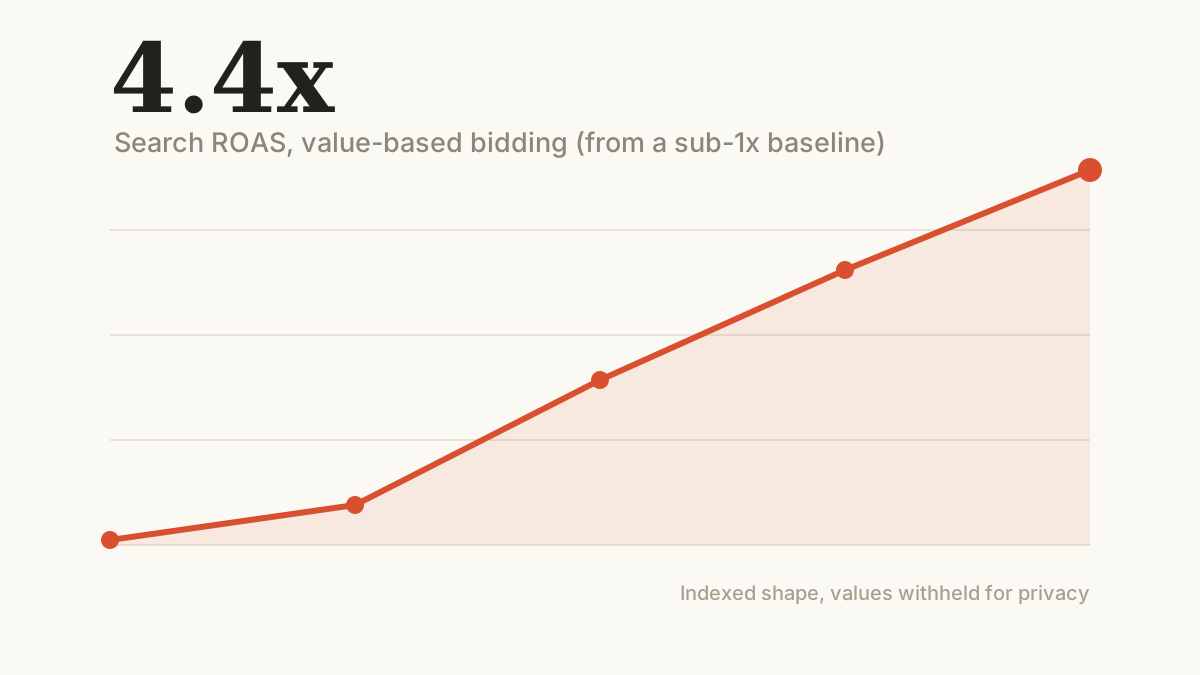
The same moves did the work across three accounts. The headline came from the WordPress plugin: its Search ROAS climbed across four consecutive periods once value bidding took over, while the leftover Maximize Conversions spend kept bleeding at a sub-1x rate until we retired it.
a Retire the volume-bidding spend
First, stop the bleed. On the plugin account, the campaigns still on Maximize Conversions were running at roughly 0.1x ROAS while the value-bidding campaigns next to them were already profitable. Running both is a tax on the account: the volume campaigns eat the budget the value campaigns could have used, and they drag the blended number down until the wins disappear from the reporting.
Then we migrate the budget across and retire the volume-bidding tail. We do not just pause it. As long as a sub-1x campaign is live, it competes with your profitable campaigns for the same budget and the same auctions. Cutting it is the cleanest, fastest move in the migration.
b Give the algorithm value to chase
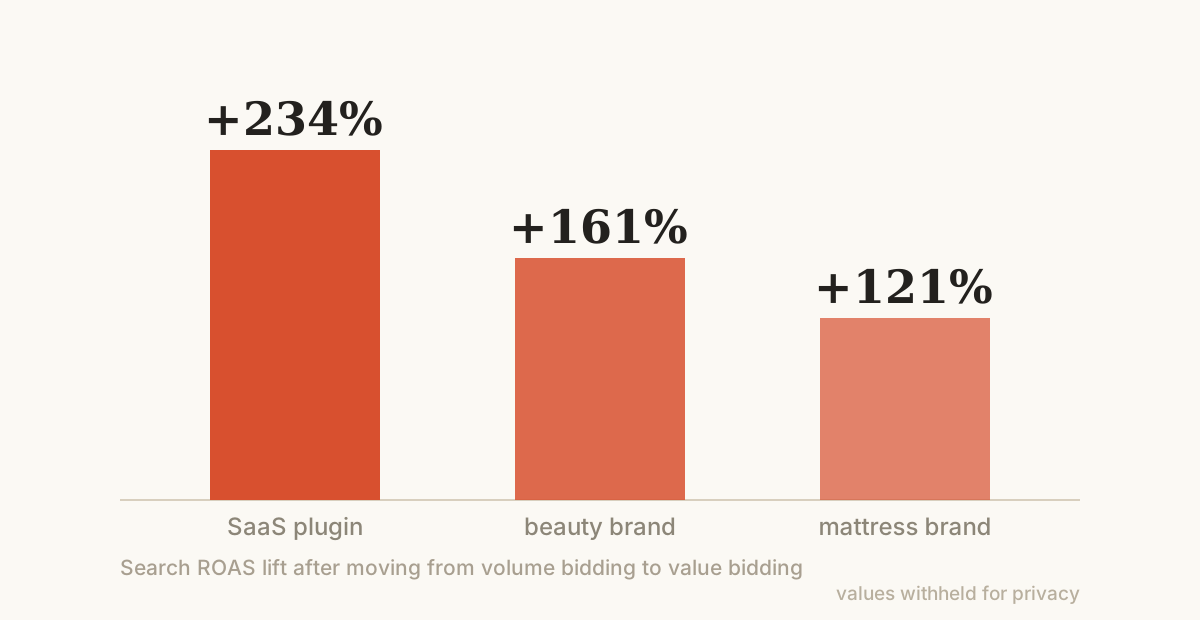
Once Maximize Conversion Value was driving the account, performance climbed period over period as the strategy gathered data: value-bidding ROAS rose +234% from its first full period to its most recent. That climb is the strategy learning which queries, audiences, devices and times of day produce high-value orders, then concentrating budget there.
It doesn't happen in a week, and patience through the learning phase is part of the method. The first two weeks after a bidding change are usually the worst two weeks, because the system is re-learning the account from scratch. Teams that panic and revert in week two never see the climb. The ones that win agreed up front to judge the change at six to eight weeks, not six to eight days.
Value bidding compounds. The longer it runs on clean data, the better it gets at finding revenue.
c Repeat it across the book
The same switch produced the same shape elsewhere. A beauty brand's Search ROAS rose +161% after moving from Maximize Conversions to Maximize Conversion Value. A mattress retailer moving from Manual CPC to the same strategy saw Search ROAS rise +121%. Different verticals and different starting points, but the switch did the same work.
That repeatability is the point of calling it a playbook. One account at 4.4x can be luck. The same switch, in three different verticals, is a method. Tell an account to value revenue, on data it can trust, and it finds more revenue, whether it sells software subscriptions, lip stain, or mattresses.
Sub-1x to 4.4x, on the same account.
On the flagship account, Search went from a Maximize Conversions baseline below 1x to 4.4x under Target ROAS. That's the account earning back more than four times its ad spend in tracked revenue, on the same budget, by changing the objective instead of the inputs.
The second and third accounts tell the same story in different verticals: +161% and +121% Search ROAS after the switch. None of it needed more spend. It needed the account pointed at value instead of volume, on data clean enough to trust.
- Every number here came from changing the bidding objective on the existing budget. None of it came from spending more.
When to make the switch, and when not to.
Value-based bidding is the right move when an account has accurate conversion values, enough recent conversion volume to learn from, and a real spread between low-value and high-value orders. If your orders are all roughly the same size, value bidding and volume bidding converge, and the upside is small. The wider the gap between your cheapest and most valuable customer, the more there is to gain by aiming at value.
If conversion values are wrong or missing, fix the measurement first, because a value strategy will only optimize harder toward the wrong number. We see this constantly: a team switches to Target ROAS on top of broken tracking and is baffled when performance gets worse. The bidding did exactly what it was told. The data told it the wrong thing.
Brand-new accounts with no history are the other exception: start on Maximize Conversions or Manual CPC to build a conversion base, then graduate to value bidding once the data exists. On established accounts the usual problem is the reverse, an account that went on volume bidding years ago for good reasons and then never moved off it.
The traps in a value-bidding migration.
Impatience is the big one. The surest way to ruin a migration is to revert during those first two bad weeks and never reach the climb. So we do not act on the dip. We agree the judgement window up front and hold to it when the early numbers look bad, because an account at the bottom of the learning dip looks the same as a failing one, and only time tells them apart.
The target itself is the next trap, and the danger runs both ways. Too high and spend collapses; too low and the account slides back toward buying volume, the exact thing you switched away from. We seed the target from real numbers and move it a few points at a time, because a big jump restarts the learning phase.
Then there's value drift, the quiet one. Conversion values that were right at launch break without anyone noticing: a site change drops the value parameter, a tax or currency tweak distorts it, a new conversion action waters down the signal. A value strategy running on drifted values fails without ever throwing an error, so we reconcile the values on a schedule instead of trusting them once.
Last is seasonality. A sale week or a peak season can spike conversion value and trick the bidding into chasing a level it cannot hold once the season passes. We flag those windows and adjust for them, rather than letting one good week reset the target to a number the account will never see again.
The migration, sequenced.
Because the order is everything, it's worth spelling out how a value-bidding migration runs, week by week. There are four phases, and rushing any one of them is how the failures happen.
Phase one is the data audit. Before we touch a bid strategy, we confirm that conversion values pass correctly from the site into Google Ads, that the primary conversion action is the right one, and that there's enough recent conversion history for a value strategy to learn from. If the values are wrong, the migration stops here until they're fixed, because every later phase only amplifies whatever the data says.
Phase two is Maximize Conversion Value, with no target yet. We move the campaign off volume bidding and let it optimize for total revenue with no ROAS constraint. That lets the system find the value in the account and settle before we ask it to hit a number. Push a target on day one and you choke spend before the strategy has learned anything.
Phase three is a realistic Target ROAS. Once Maximize Conversion Value is stable, we set a target from the account's own recent performance. Grounded in real numbers, it keeps spend flowing into the revenue you want; pitched at an aspirational figure, it just tells the system to stop competing and spend dries up.
Phase four is tightening, in small steps. With the target holding, we move it toward the efficiency goal a few points at a time, because each big jump restarts learning. Done in this order, with the learning window respected at every phase, the same budget ends up buying revenue instead of volume.
What to remember.
Volume bidding chases the cheapest conversion. Value bidding chases the most valuable one. That gap is often the difference between a sub-1x account and a 4x account on identical budget.
The switch is sequenced, never flipped: clean data, then Maximize Conversion Value, then a realistic Target ROAS, then patience through the learning phase. Get the order wrong and you'll blame the strategy for what is really a measurement problem. Get it right and the same budget starts buying revenue instead of noise.
- Search ROAS taken from a sub-1x baseline to 4.4x under value bidding
- Value-bidding ROAS up +234% as the strategy matured
- +161% and +121% Search ROAS replicated on two more accounts
- Sub-1x volume-bidding spend retired so it stops anchoring the blended number