"What's a good ROAS for ecommerce" is one of the most common questions we get, and the honest answer tends to annoy people: there is no single good number. A 3x ROAS can be a strong month for one brand and a money-losing one for another, on the same products, in the same week. What decides which one you are is your margin, not an industry average. Below are the real benchmarks, why they disagree so much, and how to work out the only ROAS figure that actually matters for your account: the one you have to clear to make a profit.
The short version
- There is no universal good ROAS. There is your break-even ROAS, set by your gross margin, and a Target ROAS that sits above it.
- Real 2025 benchmarks cluster around 1.7x to 2x for blended ecommerce and far higher for Search alone, but they are a sanity check, not your target.
- Compute break-even (1 / margin) first, then add the profit you need on top, and remember the highest ratio is not the goal.
- Trust the tracking before you trust the ROAS. A clean number beats a flattering one every time.
What is a good ROAS for ecommerce?
A good ROAS is any return comfortably above your break-even point, and your break-even point is set by your gross margin. For a store running a 30% margin, ad-driven revenue has to come back at more than about 3.3x before the spend has paid for itself. Below that you are buying revenue at a loss. Above it you are buying profit. The popular "4:1 is good" rule of thumb is really just describing a brand with roughly a 25% margin, where 4x is exactly break-even. It is a starting point, not your number.
What the benchmarks say, and why they disagree
It helps to see where the averages land before you ignore them. WordStream's 2025 study of 16,446 US campaigns (April 2024 to March 2025) put the average Google Ads conversion rate at 7.52% and the average click-through rate at 6.66%. The closest ecommerce-relevant categories converted a little lower than that blended figure: Shopping, Collectibles & Gifts at 3.83% and Apparel, Fashion & Jewelry at 3.99%, per the same dataset (WordStream, 2025 Google Ads Benchmarks).
On ROAS specifically, WebFX's 2025 paid-search analysis put ecommerce and online retail near 1.73x and brick-and-mortar retail near 2.14x, with the broad Google Ads average sitting around 2x (WebFX, Average ROAS by Industry). You will also see Google's own often-quoted claim of roughly an 8:1 return on the Search Network, and you will see brands reporting 6x and 8x of their own. These can all be true at once. The spread comes from three things: how each source defines revenue (last-click versus blended, before or after returns), which channels are in the average (high-intent Search converts far better than upper-funnel demand), and the huge range of margins underneath. A number averaged across thousands of brands running 10% to 80% margins does not describe yours.
Your break-even ROAS is the only benchmark that fits your store
There is a number that does describe yours, and it is simple arithmetic:
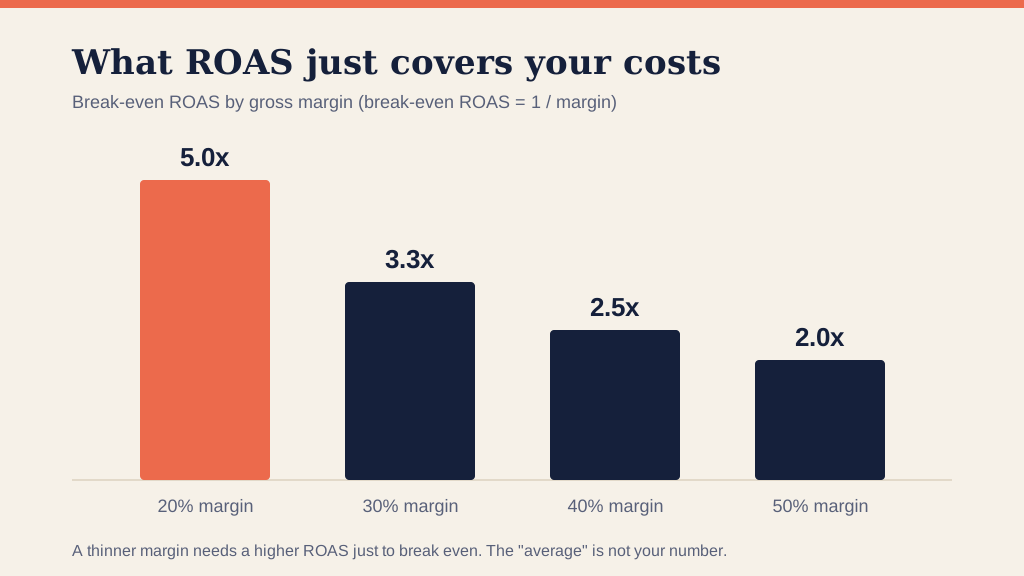
Break-even ROAS = 1 / gross margin.
| Gross margin | Break-even ROAS |
|---|---|
| 20% | 5.0x |
| 30% | 3.3x |
| 40% | 2.5x |
| 50% | 2.0x |
| 60% | 1.7x |
A thinner margin needs a higher ROAS just to stand still, which is why a 3x can be brilliant for a jewelry brand and a quiet loss for a low-margin commodity seller. WebFX makes the same point in its own report: industry figures are rough guides, and you should calculate your own break-even from your margins rather than chase an average. Work out this one number first, and our break-even ROAS calculator does the arithmetic for you. It turns "is my ROAS good" from an opinion into a fact.
A worked example: the same 3x, two different outcomes
Take two stores both running at exactly 3x ROAS this month, so for every dollar of ad spend each earns three dollars of tracked revenue. The first sells jewelry at a 60% margin. Its break-even is 1.7x, so a 3x means it is keeping a healthy slice of every advertised sale as profit and could afford to push harder for growth. The second sells a low-margin commodity at 20%, where break-even is 5.0x. The identical 3x is a loss: it is buying revenue at well below the cost of the goods plus the ads. Same headline number, opposite businesses.
This is why "is 3x good" is unanswerable in the abstract and trivial once you know the margin. It is also why we never set a client target from a benchmark. We set it from their break-even, and then we add the profit they actually want on top. The benchmark is a sanity check that you are in the right postcode; the break-even is the address.
Target ROAS is break-even plus the profit you actually want
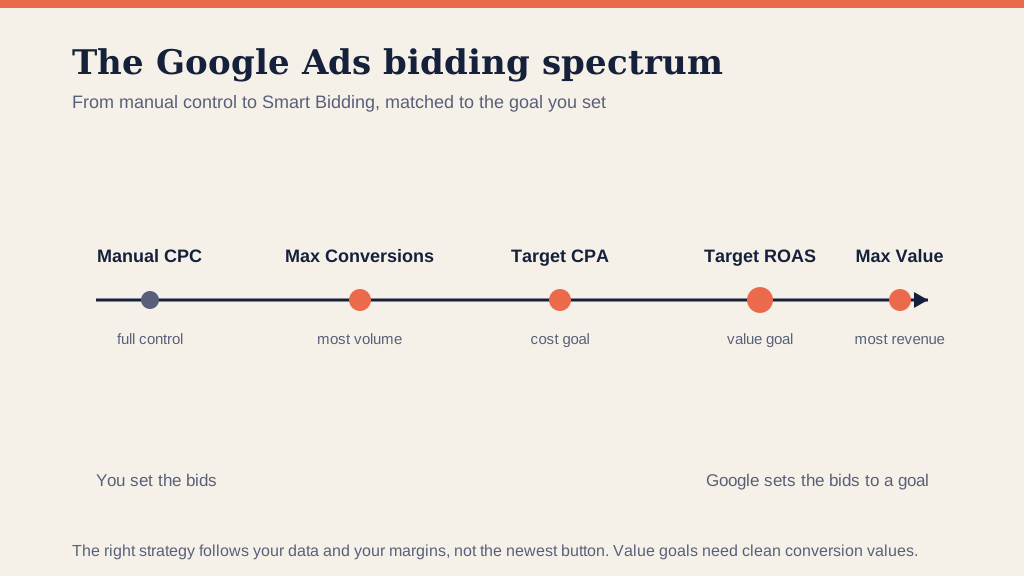
You do not bid at break-even, because break-even leaves nothing for the business. Your Target ROAS is break-even plus the margin of profit you want the channel to deliver, adjusted for how much growth you are willing to trade for efficiency. This is the whole idea behind value-based bidding: you stop telling Google to win the cheapest conversions and start telling it what a sale is actually worth, then set a Target ROAS that reflects real value. On the accounts in that playbook, that shift took Search campaigns from a sub-1x baseline that lost money to 4.4x on the same budget, and we have repeated it for +161% and +121% Search ROAS on two more. The lever was not spending more. It was changing what the account was optimizing for.
Why a higher ROAS is not always the goal
Counterintuitively, the highest possible ROAS is usually a sign you are under-investing, not winning. Push your Target ROAS up and Google narrows spend to only the safest, highest-intent queries, mostly the demand that would have converted anyway. Efficiency climbs and growth stalls. Pull the target down toward break-even and you buy more total profit by reaching further into the demand that is still worth winning, even if each sale looks less efficient. The right target sits where the next dollar of spend still clears your margin, not where the ratio looks prettiest in a screenshot.
So the question is rarely "how do I get a higher ROAS." It is "am I leaving profitable growth on the table by chasing a number." A brand sitting at 8x on a tiny budget is often making less money than it would at 4x on triple the spend. We set the target against the business goal, scale or efficiency, rather than treating a big ratio as the win.
First-order ROAS versus lifetime value
There is one more reason a "low" ROAS can be the right call: repeat purchases. If your customers come back, the ROAS on the first sale undercounts what that customer is actually worth, because it ignores every order after the first. A subscription brand or a consumable with strong reorder rates can rationally accept a first-order ROAS near or even below break-even, because the second, third and fourth purchases are where the profit lands. Judging acquisition purely on the first click's ROAS, in those businesses, systematically starves the channel that feeds the whole machine.
The discipline is to use lifetime value as a reason, not an excuse. Plenty of brands talk themselves into unprofitable acquisition by waving at an LTV number nobody has verified. So we ground it: if you are going to bid to a first-order ROAS below break-even, you need real repeat-rate data to justify it, and you need to watch new-customer economics closely enough to catch it when the assumption stops holding. A genuine LTV case is one of the strongest reasons to spend; an assumed one is one of the fastest ways to lose money politely.
A ROAS number is only as honest as the tracking under it
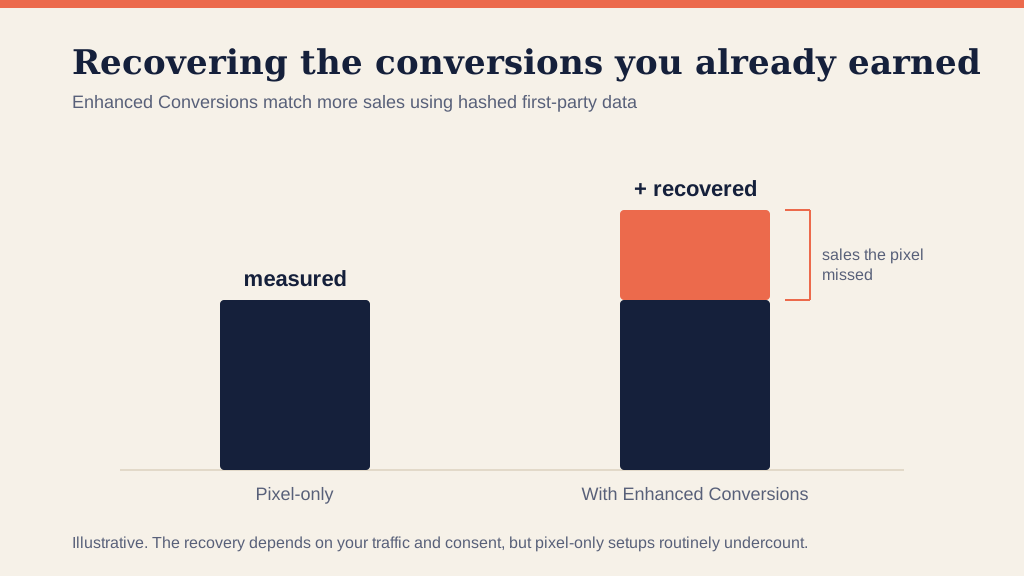
Before you trust any ROAS, trust the measurement feeding it. If your conversion values are wrong, your ROAS is fiction in either direction, and we routinely find ad-platform and GA4 numbers that disagree with the store's own backend by double-digit percentages. On one account we took over, that gap was roughly 50%, which is the case behind our measurement rebuild work. A gap that size does not just misreport the ROAS, it points the budget at the wrong campaigns entirely. The cause usually traces back to broken or client-side-only tracking, duplicate events, or conversions counted at the wrong value, increasingly because privacy features and ad blockers stop browser pixels from firing at all, which is why server-side tracking matters. It is why we rebuild conversion tracking and stand up clean web analytics before we touch bidding. A bidding algorithm pointed at a bad ROAS signal will optimize confidently toward the wrong outcome.
ROAS by channel and campaign type
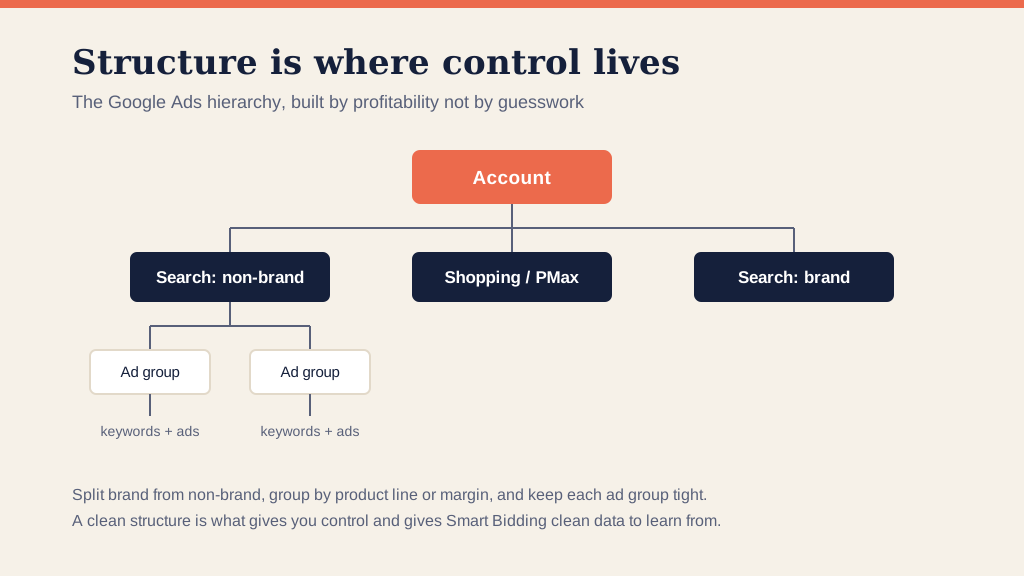
Blending all of paid into one ROAS hides more than it shows. Search captures people already looking for what you sell, so it tends to return the most per dollar. Shopping and Performance Max sit close behind when the product feed is clean and the campaigns are structured by profitability rather than lumped together. Brand Search will always post the highest ROAS in the account, often 10x or more, because it is demand you already earned, which is exactly why it should be reported separately so it never flatters acquisition. Upper-funnel demand and most paid social run lower on a last-click basis because they are creating demand, not harvesting it, and they should be judged on blended performance over a longer window rather than the same target as branded Search. The practical takeaway: set a Target ROAS per channel and per intent, not one figure for the whole account.
Where a ROAS number misleads you
Even an honest ROAS can lead you to the wrong decision if you read it without context. The first trap is blended ROAS hiding a weak non-brand: a healthy account average can be carried entirely by brand while prospecting bleeds underneath it, and the fix is to split the two before you judge either, the discipline in our non-brand playbook. The second is last-click attribution punishing the upper funnel: a campaign that introduced a customer who later searched your brand and bought gets none of the credit, so it looks worse than it is. The third is seasonality, where a sale week spikes conversion value and tricks you into setting a target the account cannot hold once the season passes. A ROAS figure is a starting point for a question, not the end of one.
How to actually move ROAS
Raising ROAS is rarely about one clever setting. In order of impact: fix the tracking so the number is real; bid on value instead of volume; mine search terms and build out negatives so you stop paying for clicks that never convert; clean the feed so the right products show for the right queries; and keep brand and non-brand separate so efficient branded traffic never flatters the acquisition that needs scrutiny. Each of those is a lever we pull as a Google Ads agency for ecommerce, and each one moves the honest ROAS rather than the reported one. It is how we scaled a beauty brand's spend close to 9x while holding its ROAS steady from a standing start.
Frequently asked questions
What is the average ROAS for ecommerce in 2025? Independent analyses put blended ecommerce ROAS around 1.7x to 2x, with Search far higher, but these averages span every margin and channel, so they are a sanity check rather than a target. Your break-even, set by your gross margin, is the only benchmark that fits your store.
Is a 4x ROAS good? Only if it clears your break-even with room to spare. At a 25% margin, 4x is exactly break-even, so you are making nothing; at a 50% margin, 4x is comfortably profitable. The same ratio is a different verdict at a different margin.
Should I aim for the highest ROAS possible? Usually not. A very high ROAS often means you are under-spending and leaving profitable growth unclaimed. Aim for the target where the next dollar of spend still clears your margin, which buys more total profit than chasing the prettiest ratio.
Why is my reported ROAS higher than my real profit? Almost always tracking. Platforms over-claim, brand flatters the blend, and missing or mis-valued conversions distort the number. Reconcile your platform figures against your backend orders before you trust the ROAS.
Can I run a lower ROAS if my customers repeat? Yes, and many should. If reorder rates are strong, the first sale's ROAS undercounts the customer's real value, so a first-order target near or below break-even can be rational. Just ground it in verified repeat-rate data rather than an assumed lifetime value, or you will lose money politely.