
The query report is mostly noise, and the noise costs money.
There is a difference between the keywords you bid on and the search terms you actually show for, and that gap is where budgets die. You add a keyword on broad or phrase match, and Google matches it to thousands of real queries, most of which you never intended and most of which never convert. The keyword looks fine in the report; the search terms underneath it tell a different story.
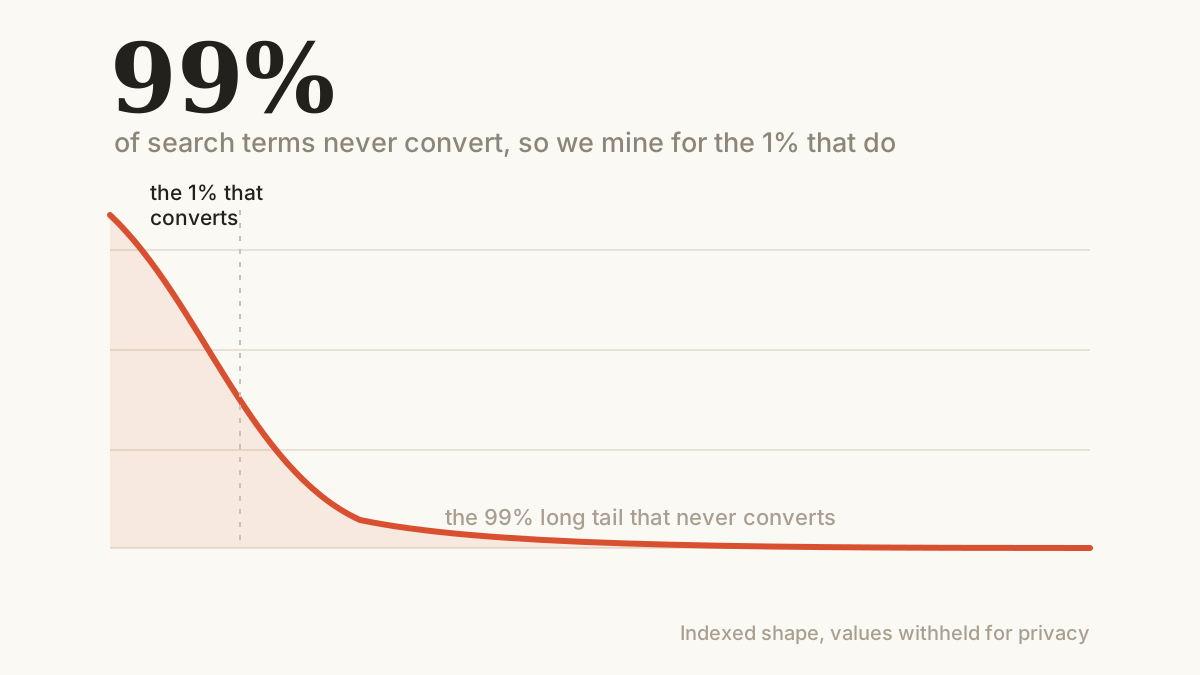
The scale of the noise is genuinely hard to believe until you measure it. On one account we looked at over a single year, around 99% of the unique search terms it triggered produced zero conversions. That is not a broken account; that is normal. The long tail of search is overwhelmingly made of one-off, low-intent, never-converting queries.
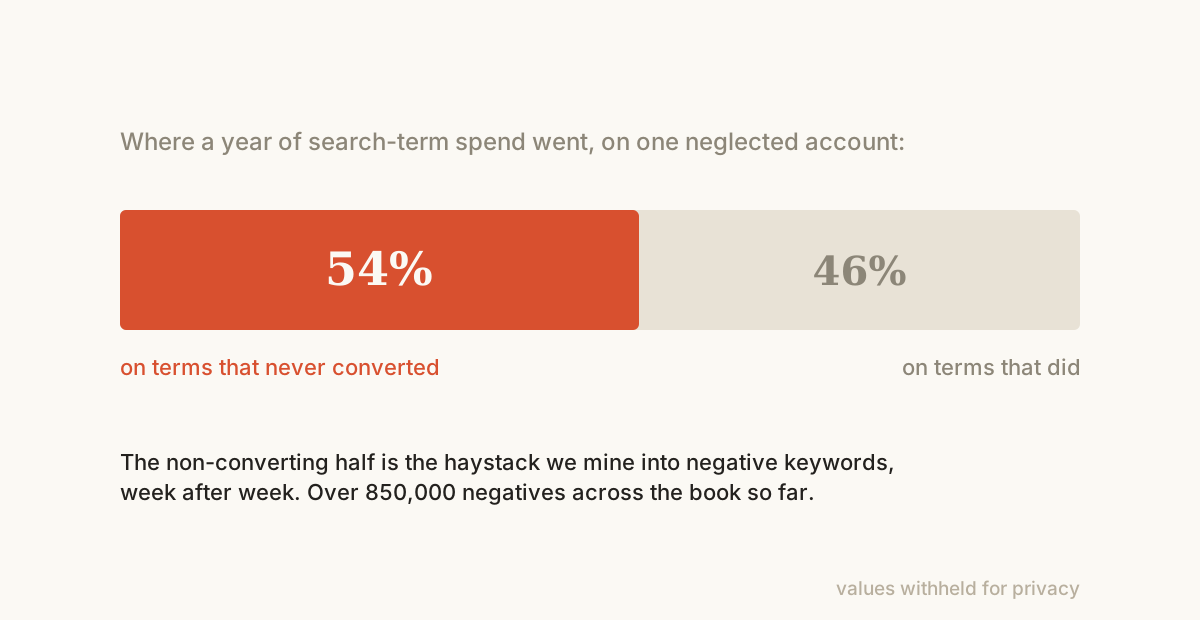
The cost is the part that hurts. On that same account, more than 54% of search-term spend over the year landed on terms that did not convert at all. Some of that is unavoidable, the cost of discovering which queries are worth keeping, but a large share of it is pure waste that a disciplined negative-keyword routine would have caught.
Left ungroomed, this is a slow, invisible leak. The campaigns look healthy, the budget spends, and a meaningful fraction of it drains into queries that were never going to buy. Nobody notices, because nobody is reading the search-term report every week. We are.
Mine the search terms, build the negatives, repeat forever.
The method is boring on purpose. Every week we read the search-term report, separate the queries that convert (or show real intent) from the ones that waste, and turn the wasteful ones into negative keywords before they spend another dollar. The converting and high-intent terms get promoted into their own keywords and ad groups, so they get the budget and the tailored ad copy they deserve.
Match type is the dial that controls how much noise comes in. Broad match casts wide and needs the heaviest grooming; phrase and exact narrow the funnel. We do not avoid broad, because broad is where new demand is found, but we pair it with a relentless negative-keyword habit and tight conversion signal so the algorithm has something real to steer by. Broad without negatives is just a faster way to waste money.
Negatives are organized, not dumped. Account-level and shared negative lists catch the universal junk (jobs, free, DIY, competitor terms you do not want, irrelevant categories) across every campaign at once; campaign and ad-group negatives handle the finer separation, including sculpting traffic between brand, non-brand and competitor campaigns so each only shows for what it should. This is the structural backbone of disciplined Google Ads management.
- Read the search-term report weekly
- Promote winners, negate wasters
- Keep organized, layered negative lists
What turns the leak off.
The work compounds. Across the accounts we manage, the negative-keyword lists have grown to over 850,000 entries, each one a query we decided was not worth paying for again. That number is not a vanity stat; it is years of accumulated judgement about what wastes money in these niches, and it is exactly the kind of asset a new team starting over does not have.
a Promote the winners
Search-term mining is not only about cutting. The other half is finding the queries that convert and giving them their own keywords, ad groups, and ad copy. A converting search term buried inside a broad keyword is an opportunity hiding in plain sight: pulled out and given a tailored ad and landing page, it converts even better. Every week's report is a list of both negatives to add and winners to promote.
The same report that finds the waste also finds the next high-intent keyword to build out.
b Negate the wasters, in layers
The wasteful queries become negatives, placed at the right level. Universal junk goes on shared lists applied across the account, so it never has to be caught twice. Pattern waste (a recurring irrelevant modifier, a wrong-intent phrase) gets negated at the campaign level. This layering is why our negative lists run into the hundreds of thousands: they are built to catch waste once and keep catching it forever.
A negative added once keeps protecting the budget every week after, with no further work.
c Sculpt traffic between campaigns
Negatives are also how we keep brand, non-brand and competitor campaigns from stealing each other's traffic. Without brand terms negated out of the non-brand campaign, a brand search can serve from the wrong campaign at the wrong bid and pollute both numbers. Careful negative sculpting keeps each campaign showing only for the intent it was built for, which is what makes the brand vs non-brand split meaningful in the first place.
d Keep the lists alive
Language moves, and so does waste. New products spawn new irrelevant queries; a news event makes an old keyword suddenly ambiguous; a competitor launches a product whose name collides with yours. A negative list that was perfect last year goes stale, so part of the job is pruning and updating the lists, not just adding to them. The 850,000 is a living number, not a museum piece.
Waste is a moving target, so the negative lists are maintained, not just accumulated.
Budget that goes to buyers, not to noise.
The payoff of relentless search-term mining is that a far larger share of spend reaches queries that convert, and the prospecting campaigns stay profitable instead of leaking into the long tail. It is the work underneath every other result on this site: the value bidding, the prospecting targets, the PMax exclusions all assume the account is not hemorrhaging budget on junk queries.
The scale tells the story: around 99% of search terms never convert, over 54% of search-term spend can land on non-converters, and over 850,000 negatives stand between an account and that waste. The difference between a groomed account and an ungroomed one comes down to whether someone reads the report every week.
- Cutting wasted spend is not a one-time cleanup. It is a weekly habit that keeps every other lever honest.
Reading your own search-term report.
Open your search-term report for the last 30 days and sort by cost. Then look at how much of that spend sits on terms with zero conversions. If it is a large share and nobody has added negatives recently, you have found money. The terms at the top of that list, spending without converting, are the first negatives to add.
Next, check whether you even have shared negative lists applied across the account. Many accounts catch the same junk query campaign by campaign, over and over, because no one set up account-level lists. A handful of well-built shared lists removes whole categories of waste in one move.
Then make it a routine. The single biggest predictor of a clean account is whether search-term review happens on a schedule. Monthly is the floor; weekly is better. The waste never stops arriving, so the grooming cannot stop either.
How waste creeps back.
Broad match without a leash is the first thing we watch. Broad is powerful and is being pushed harder than ever, but on thin conversion signal it wanders, and a single broad keyword can spray spend across hundreds of irrelevant queries in a week. We only run broad where the conversion data and the negative lists are strong enough to keep it honest.
The opposite risk is over-negation. It is possible to groom too hard, adding negatives so aggressively that you block converting queries or starve the campaign of volume. A negative is a permanent decision, so we watch for the ones that suppress good traffic, and we review the negative lists for false positives, not just gaps.
Then new-product and seasonal drift. A product launch, a rebrand, or a seasonal swing changes which queries are relevant overnight, and a stale negative list can block exactly the terms you now want. We revisit the lists when the catalog or the calendar changes, not only when the report looks messy.
Last, the cross-campaign leak. As accounts grow, brand, non-brand and competitor campaigns drift into each other's territory without the right negatives keeping them apart. We watch the search-term report for traffic serving from the wrong campaign, because that corrupts the very brand-versus-non-brand numbers everything else is judged on.
What a weekly session looks like.
The discipline is concrete, not abstract. A weekly search-term session runs the same way every time: pull the report for the period, sort by cost, and work from the top down. The high-spend non-converting terms are triaged first, because that is where the money is leaking fastest.
Each term gets one of three verdicts. Convert or show real intent: promote it into its own keyword with tailored copy. Pure waste: negate it, at the account or shared-list level if it is universal junk, at the campaign level if it is pattern waste. Ambiguous: leave it and watch it another week. The shared lists get updated so the same junk never has to be caught twice.
Done weekly, this compounds: the negative base grows, the wasted spend shrinks, and the converting terms get the budget and copy they deserve. Done quarterly, the leak runs for months between cleanups. The cadence is the difference, and it is why the negative base across our accounts runs past 850,000 entries rather than a few thousand.
Match type is the dial that decides how much of this work there is. Broad match is being pushed harder than ever and it does find demand the tighter types miss, but it only pays on strong conversion signal and a relentless negative habit; broad without negatives is just a faster leak. We run broad where the data can keep it honest, and lean on phrase and exact where control matters more than discovery, matching the match type to how groomed the campaign actually is.
At scale, eyeballing the report stops working, so we mine it by pattern. Looking at the recurring words and phrases across non-converting terms, the n-grams, surfaces whole themes of waste at once: a modifier that never converts, an intent that does not fit, a category that is not ours. Negating the pattern catches not just the terms that already spent but the thousands of future variants of them, which is how a list grows into the hundreds of thousands without anyone typing them one by one.
The lists themselves are architected, not piled up. Universal junk lives on a few shared lists applied account-wide, so it is caught everywhere at once and maintained in one place. Account-specific patterns live at the campaign level. And a separate layer sculpts traffic between brand, non-brand and competitor campaigns, so each serves only its intended intent. Good list architecture is why adding a negative once protects the budget forever, instead of being re-discovered campaign by campaign.
The promote side deserves the same rigor as the negate side. A converting term buried in a broad keyword is an opportunity hiding in plain sight, so the weekly pass pulls winners into their own keywords with tailored copy and the right landing page, where they convert even better. Cutting waste and promoting winners are two halves of the same report, and doing only the first leaves money on the table even on a clean account.
What to remember.
Around 99% of the search terms an account triggers never convert, and on a neglected account more than half the search-term spend can land on them. That is the normal state of Search, and it is a slow, invisible leak.
The fix is not clever, it is consistent: read the search-term report every week, promote the winners, negate the wasters in organized layers, and keep the lists alive as the waste moves. Over 850,000 negatives is what that discipline looks like after years of doing it, and it is the foundation every other playbook stands on.
- Over 850,000 negative keywords maintained across the accounts we manage
- Search-term spend redirected from the 99% that never convert to the core that does
- Layered shared and campaign negatives that catch waste once and keep catching it
- Converting search terms promoted into their own keywords, ad groups and copy