Attribution is one of those settings almost nobody changes and almost everybody is affected by. The model you run decides which campaigns get credit for your sales, which decides which campaigns look like winners, which decides where you move budget. Get it wrong and you defund the campaigns that actually created the demand. This guide explains how attribution works in GA4 and Google Ads, and how to read it without fooling yourself.
The short version
- An attribution model is the rule that shares credit for a conversion across the ads and clicks that led to it.
- GA4 and Google Ads now default to data-driven attribution; the old rule-based models (first-click, linear, time-decay, position-based) are retired in GA4.
- Last-click hands all the credit to the final touch and starves the prospecting that started the journey.
- No model is the whole truth, so read campaign attribution alongside a blended, model-free number like MER.
- Whatever the model, it is only as honest as the tracking under it, so fix measurement first.
What is an attribution model?
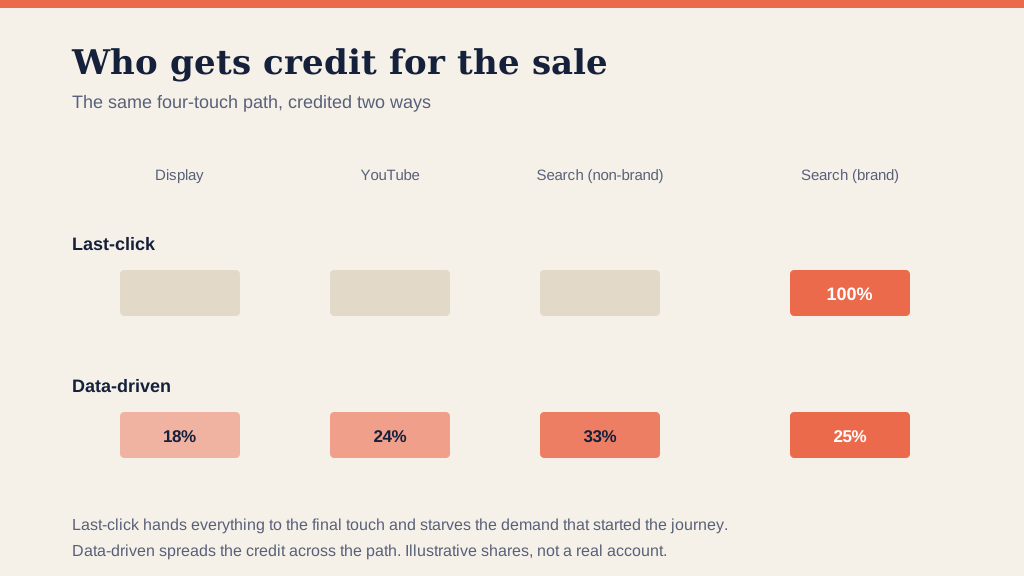
An attribution model is the rule that decides how credit for a conversion is divided among the touchpoints that led to it. A shopper might see a Display ad, watch a YouTube ad, click a non-brand Search ad, then come back a day later on your brand name and buy. Four touches, one sale. The model decides how much of that sale each touch gets.
That sounds academic until you realise the model is what sets your budget priorities. If it hands everything to the final click, the campaigns at the top of the funnel look worthless, even though they started the whole journey.
How does data-driven attribution work?
Data-driven attribution, now the default in both GA4 and Google Ads, uses your account's own conversion data to estimate how much each touchpoint actually contributed. Instead of a fixed rule, it compares paths that converted with paths that did not and distributes credit accordingly.
For most accounts it is the fairest option available, because it values the assist as well as the close. It is not magic, and it still depends on having enough data and clean tracking, but it beats a rule that ignores everything except the last step.
How is last-click different?
Last-click attribution gives 100% of the credit to the final touch before the conversion. It is simple, and it is why brand campaigns and remarketing always look spectacular: they tend to be the last click, catching demand that earlier campaigns created.
The damage is quiet. Under last-click, your non-brand prospecting looks weak, so you cut it, so the top of the funnel dries up, so a few months later the whole account slows down and nobody can see why. GA4 retired first-click, linear, time-decay and position-based models, but last-click is still available in the Advertising section as a comparison, which is the useful way to use it: compare, do not run your account on it.
Why the model changes where budget flows
The reason attribution matters is entirely practical: it decides which campaigns look successful, and budget follows the campaigns that look successful. Switch from last-click to data-driven and your prospecting and upper-funnel campaigns suddenly show the credit they were always earning, while brand comes back to earth.
That is why we never let one model make the call alone. We read campaign-level attribution next to the blended, model-free view of MER, the total revenue over total spend that no attribution setting can inflate. The discipline of using both is in our MER vs ROAS guide.
Why GA4 and Google Ads conversions do not match
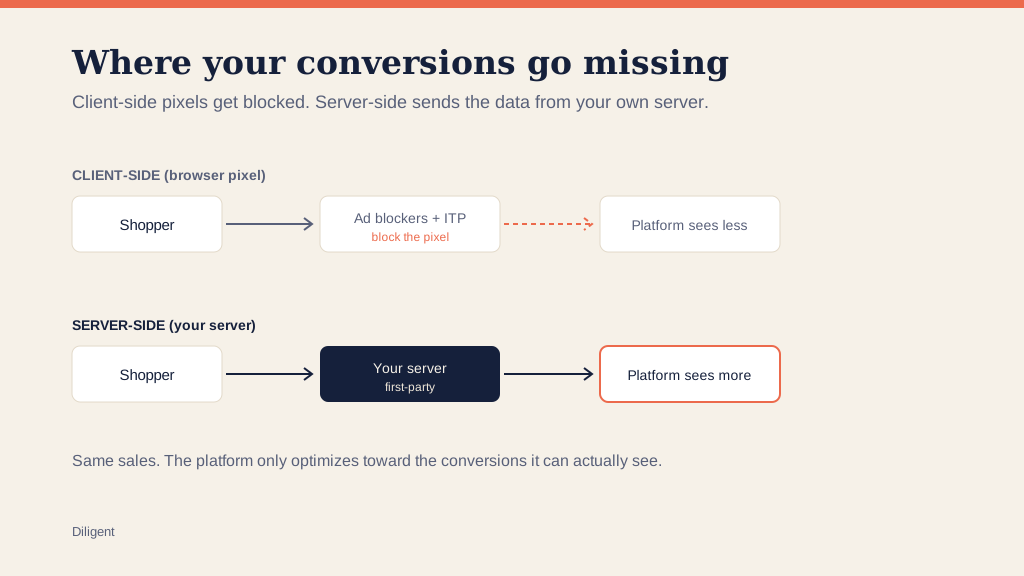
People lose hours trying to make GA4 and Google Ads agree on conversions. They will not, and that is expected. The two use different attribution, different conversion windows, and different counting rules, so they credit the same sale differently. The fix is not to force them to match but to reconcile both against the one source that cannot lie: your backend orders. That reconciliation is only possible with trustworthy conversion tracking underneath.
Frequently asked questions
What is the default attribution model in GA4? Data-driven attribution. GA4 and Google Ads both default to it now, and the older rule-based models like first-click, linear, time-decay and position-based have been retired from GA4. Last-click is still available as a comparison in the Advertising section.
What is the difference between data-driven and last-click attribution? Last-click gives all the credit for a conversion to the final touch before the sale. Data-driven attribution spreads the credit across the touchpoints on the path, using your account's own data to estimate how much each one contributed. The model you choose changes which campaigns look successful.
Which attribution model should I use? For most accounts, data-driven, because it values the whole path rather than only the last click. But no single model is the full truth, so we read campaign-level attribution alongside a blended, model-free view like MER, which cannot be gamed by any attribution setting.
Why do GA4 and Google Ads conversions not match? Different attribution, different windows, and different counting rules. GA4 and Google Ads can credit the same sale differently, and each has its own conversion window. Reconcile them against your backend orders rather than expecting the two platforms to agree exactly.
Does the attribution model change my actual revenue? No. It only changes how credit for that revenue is distributed across campaigns in reporting. The money is the same; the model decides which campaigns get the credit, and therefore where you are tempted to move budget.
Attribution is a lens, not the truth, and the lens is only as clear as the data behind it. If you want the measurement built so the numbers you act on are real, that is what our web analytics service is for.