
Teams change the campaign type and skip the feed.
When Shopping underperforms, the reflex is to reach for a new campaign type. Standard Shopping not working? Move to Smart Shopping. Smart Shopping retired? Move to Performance Max. The campaign type changes, the feed underneath it does not, and the disappointment carries over because the real ceiling never moved.
Google retired Smart Shopping in 2023 and folded it into Performance Max, so today the decision is Standard Shopping versus Performance Max. But the underlying truth is the same as it was in the Smart Shopping era: handing targeting and bidding to the algorithm only helps if the feed gives it something good to work with. A migration done on a broken feed just locks the problem behind a blacker box.
So the question is never only "which campaign type." It is "is the feed ready for the campaign type we want." Get that order wrong and you migrate your problems instead of your products.
Fix what can show, then change how you bid.
Step one is coverage: clear the disapprovals so the full catalog is eligible, and enrich titles, types and attributes so products match the way people search. A complete, well-described feed widens the surface area Shopping can compete on before a single bid changes. Most of the easy wins in Shopping are not bidding wins; they are products that were invisible becoming visible.
Only then do we change the campaign type and bidding. Moving from Standard Shopping to Smart Shopping or Performance Max hands targeting and bidding to the algorithm, which works far better on a clean, complete feed than a broken one. Done in that order, the upgrade compounds with the feed work instead of fighting it.
We also stage the migration so the dip is small. A clumsy switch drops revenue for a month while the new campaign learns; a staged one, with budgets and targets set from the account's real numbers, keeps the dip shallow and the recovery quick. Both halves are the core of our Shopping feed management and Shopping and PMax work.
- Clear disapprovals, restore coverage
- Enrich titles, types and attributes
- Then migrate Standard to PMax
What made the Shopping number move.
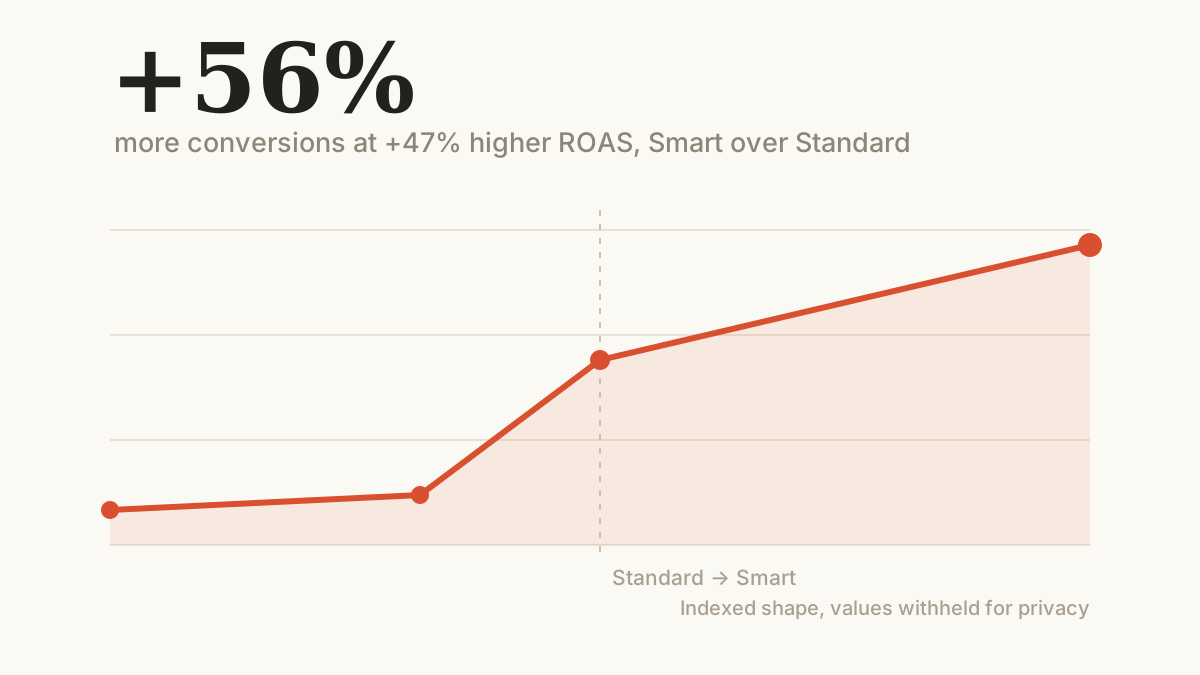
The headline came from a beauty brand whose move from Standard to Smart Shopping, on a feed we had cleaned first, delivered more conversions at a higher ROAS at the same time. A large retailer shows the same feed-first discipline holding Shopping at high efficiency across a deep catalog.
a Get the whole catalog eligible
Feed health is boring and decisive. An account arriving with a large share of products disapproved is running Shopping on a fraction of its inventory. Clearing those disapprovals and filling in missing attributes does not just fix the broken products; it widens the range of searches the whole account can compete for.
On accounts we take over, this is often the single biggest immediate lever in Shopping, ahead of any bidding change. A product that cannot show earns nothing no matter how good your bidding is, so getting the catalog eligible is free reach you are already paying to advertise.
Every disapproved product is paid-for inventory that cannot show. Fixing the feed is free reach.
b Upgrade the campaign type on a clean feed
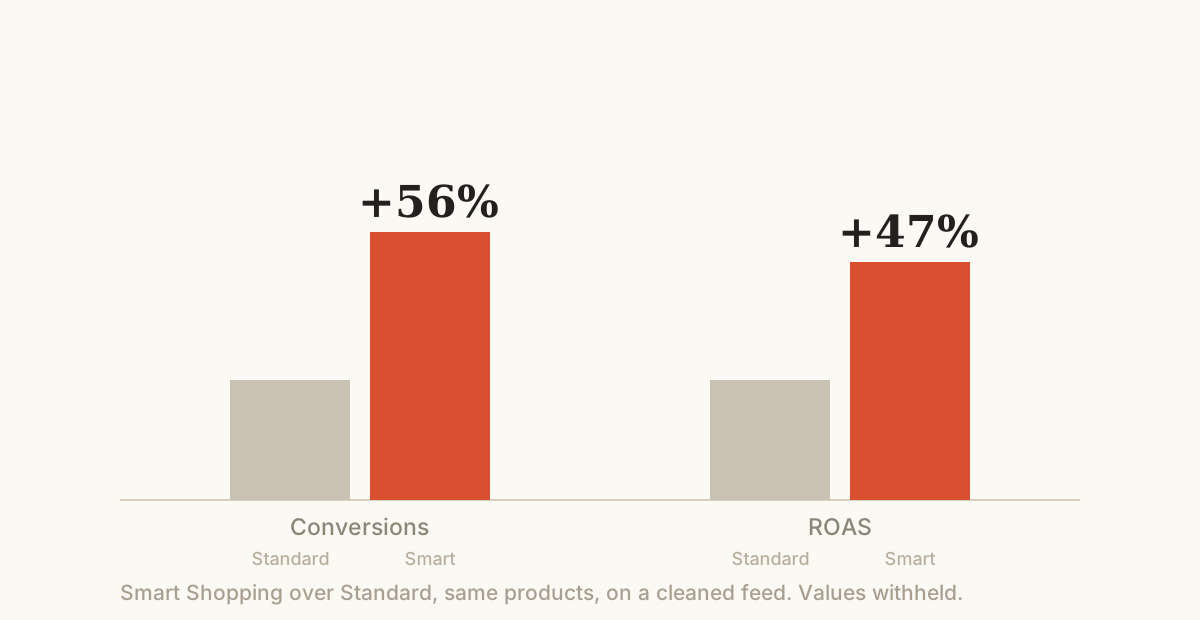
With the feed clean, the bidding upgrade pays off. Moving the beauty brand from Standard to Smart Shopping produced +56% more conversions at a +47% higher ROAS, more volume and better efficiency from the same products.
That combination, more conversions and a higher ROAS at once, is the tell that the feed work came first. On a broken feed, an automated campaign type usually buys volume at the cost of efficiency or vice versa. Getting both at the same time is only possible because the algorithm was handed a complete, well-described catalog to optimize.
Smart Shopping or PMax on a clean feed buys both: more conversions and a higher ROAS at once.
c Hold it across a deep catalog
The method scales. On a large mattress and bedding retailer, Shopping holds around 8.8x ROAS across a deep catalog, because the feed is maintained as a living asset rather than set up once and forgotten.
Feed health is never a one-time cleanup. Catalogs change, prices change, products go out of stock, and Merchant Center finds new reasons to disapprove items every week. The accounts that keep Shopping efficient at scale are the ones that treat the feed as a maintained asset, not a file they uploaded once.
More conversions and a higher ROAS, from the same products.
Done feed-first, the Standard-to-Smart move delivered +56% conversions at a +47% higher ROAS, and the same discipline holds Shopping near 8.8x on a much larger catalog. None of it required new products or more budget. It required a feed clean enough for the campaign-type upgrade to work.
- Shopping is feed first, campaign type second. In that order, the Standard-to-PMax upgrade pays for itself.
Before you blame the campaign type.
Open Merchant Center and look at your disapproval rate before anything else. If a meaningful share of your catalog is disapproved, that is your first and biggest opportunity, ahead of any campaign-type change. Then look at your titles: do they contain the words people search, or just internal product names?
Only once the feed is clean and complete should you weigh a move from Standard Shopping to Performance Max. Made on a broken feed, that move can lock the problem behind a black box you can no longer see into. Made on a clean one, it is one of the most reliable upgrades in the account.
If you do migrate, stage it. Set budgets and targets from the account's real numbers, expect a short learning dip, and judge the result at six to eight weeks, not in the first two weeks when the new campaign is still learning.
Where Shopping migrations go wrong.
The cardinal sin is migrating on a broken feed. Moving Standard to Performance Max while a third of the catalog is disapproved just hides the problem behind a campaign type you can no longer see into. We clear the feed first, every time, and only then change how the products are bid.
Then the learning dip. A migration done clumsily drops revenue for a month while the new campaign learns; done in stages, with budgets and targets set from real numbers, the dip is shallow and short. We stage it and tell everyone to expect a couple of weeks of noise before judging anything.
Third, overlap. Running Standard Shopping and Performance Max on the same products at the same time now lets Ad Rank decide which serves, which can muddy results and waste budget if it is not deliberate. We watch for unintended overlap and structure the account so the two are not competing with each other.
And last, treating titles as solved once products are approved. Approval just means a product can show; whether it shows for the right searches depends on titles, types and attributes that match how people search. We keep optimizing the feed past the point of approval, because eligible and competitive are not the same thing.
Staging the migration.
The reason a Standard-to-Performance-Max move scares people is the learning dip: the new campaign drops revenue for a stretch while it learns, and a clumsy switch makes that dip deep and long. Staged properly, the dip is shallow and the recovery quick. Here is how we de-risk it.
Feed first, always. The playbook hinges on this: the feed is clean before the campaign type changes. Migrating on a broken feed buries the problem inside a black box, so the disapprovals are cleared and the titles enriched before anything moves.
Seed the new campaign from real numbers. Budgets and the Target ROAS on the new Performance Max campaign are set from the Standard campaign's actual history, not guesses, so the system starts near the right operating point instead of discovering it the expensive way.
Overlap, then hand over. Rather than killing Standard the moment PMax launches, we let them run together briefly and watch how Ad Rank splits the traffic, then wind Standard down as PMax proves it can hold the performance. This keeps a floor under revenue during the transition instead of betting the whole catalog on a cold campaign.
Judge it at six to eight weeks. The first two weeks are learning-phase noise, so the migration is assessed once the new campaign has settled. Everyone agrees that window up front, which is what stops a nervous week-two revert from throwing away a migration that was working.
There is also a real question of whether to migrate at all. Standard Shopping still has a place: it gives granular control over bids, priorities and which products show for which queries, which can beat Performance Max for advertisers who want that control or who run a small, tightly-managed catalog. We do not migrate on reflex; we migrate when the automation will genuinely do better than the hands-on control it replaces.
When the two run together, we watch how they interact. With Standard and Performance Max targeting the same products, Ad Rank now decides which serves, so without deliberate structure they can compete with each other and muddy the read. We use that overlap only as a controlled transition, then commit to one, rather than leaving both fighting over the same catalog indefinitely.
And the feed work does not stop at launch. The post-migration regret we see most is treating the feed as finished once the campaign type changed; in reality, that is when ongoing hygiene matters most, because the automation is now leaning entirely on the feed. New products, price changes and stock swings all need to flow cleanly, or the shiny new campaign slowly inherits the old problems. The migration is a moment; the feed is forever.
One last trade-off to go in with eyes open: Performance Max reports less than Standard Shopping did. You lose some of the granular, query-level and product-level visibility, which is the price of handing the work to the automation. We offset it by leaning on the channel and listing-group reports that do exist, by keeping conversion tracking airtight so the totals are trustworthy, and by reading new-customer and product-level trends rather than the query detail PMax no longer hands over. The control you trade away has to be worth the performance you gain, which is exactly why the decision to migrate is one we make deliberately, not by reflex.
What to remember.
Shopping performance is capped by the feed long before it is capped by the campaign type. Clear the disapprovals, enrich the data, then migrate Standard to Performance Max, and you can win more conversions and a higher ROAS at the same time.
Skip the feed and even the best campaign type is competing with one hand tied. Smart Shopping became Performance Max, but the rule did not change: feed first, automation second.
- +56% conversions at a +47% higher ROAS, Smart over Standard
- Catalogs taken from heavy disapproval rates back to near-zero so the full range can show
- Shopping held near 8.8x across a deep catalog with ongoing feed hygiene
- Campaign type upgraded only after the feed was clean, so the move compounded