
When GA4 cannot source a session, it hides it in Unassigned.
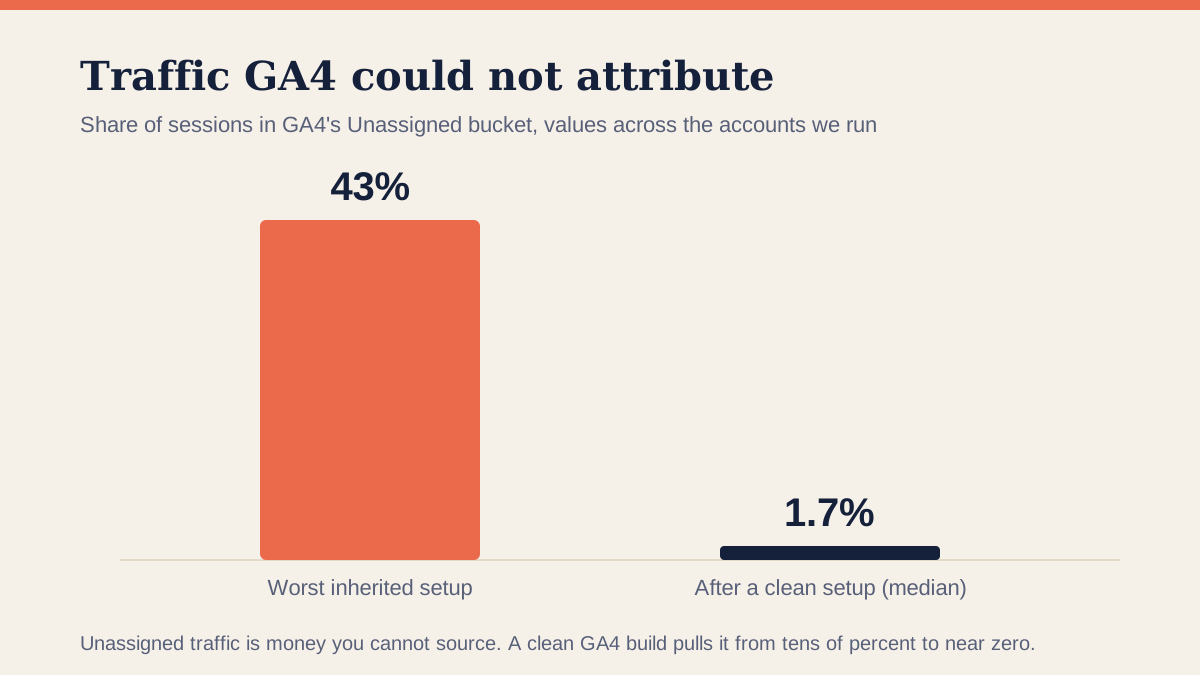
Open the acquisition report on a GA4 property nobody has cleaned and you often find a large slice of traffic sitting in Unassigned, the bucket GA4 falls back to when it cannot match a session to any channel. On the worst property we inherited, 43% of sessions were unassigned, and 71% were either unassigned or untagged direct. More than two thirds of the traffic had no usable source.
That is not a reporting quirk to shrug off. Every channel decision, every claim about what organic or paid or email is worth, rests on GA4 knowing where the session came from. When a third or a half of it is unattributed, the channel report is partly a guess, and the budget moved on the back of it is moved half-blind.
The cause is almost always mechanical: missing or stripped UTMs, redirects that drop parameters, a payment or checkout domain not excluded, or consent gaps. It is the same family of faults behind rebuilding measurement, read from the acquisition side.
Find the leak, fix the tagging, then trust the channels.
We start by measuring the gap honestly: what share of sessions is unassigned, and how much of the direct bucket is really untagged traffic hiding in plain sight. That number sets the size of the problem and the ceiling on how much your channel reporting can be trusted today.
Then we chase the mechanical causes. Referral exclusions for payment and checkout domains so a buyer is not counted as a new referral. UTM discipline on every campaign, email and paid link so the source survives the click. Cross-domain configuration where the store spans domains. Consent Mode so declined sessions are modeled rather than dumped. Each one moves traffic out of Unassigned and back onto the channel that earned it.
- Measure the unassigned and untagged-direct share
- Fix the tagging, exclusions and cross-domain gaps
- Restore channel reporting you can budget against
What moves traffic out of Unassigned.
The gap almost never has one cause; it is a handful of small leaks that add up. We work them in order of size, and the unassigned share drops as each is closed.
a UTM and link discipline
The biggest source of unassigned traffic is links that carry no source. Email blasts sent without UTMs, paid links relying on auto-tagging that is not enabled, affiliate and social links that arrive naked. Every one of those lands in direct or unassigned. We put a tagging convention on every outbound link and turn on auto-tagging where the platform offers it, so the source survives the journey to GA4.
b Referral exclusions and cross-domain
A shopper who leaves for a payment gateway and returns often gets counted as a brand-new referral from that gateway, which breaks the original attribution and inflates direct. We exclude the payment, checkout and auth domains, and configure cross-domain measurement where the store spans more than one domain, so a single journey stays a single journey.
Most of the gap is mechanical: naked links and missing exclusions, not a mystery about your audience.
c Consent and modeling
Sessions where a visitor declines cookies can vanish into unassigned if consent is not handled properly. With Consent Mode configured, GA4 models those sessions instead of dropping them, which recovers both the count and the source. It is the same first-party discipline behind Enhanced Conversions, applied to acquisition rather than conversions.
From tens of percent unassigned to almost none.
Across the properties we run, the median unassigned share is now 1.7%, against inherited setups that ran as high as 43%. The blended book still shows 5.5% unassigned, because it includes the accounts we are still cleaning, which is the honest picture rather than a cherry-picked one.
The point is not a tidier pie chart. It is that once traffic is attributed, the channel report becomes something you can budget against, and the analytics finally agree with what the ad platforms and the store are telling you.
- The win is channel data you can act on, instead of a third of your traffic shrugging its shoulders about where it came from.
When this pays, and when to rebuild first.
This work pays for any business making channel decisions from GA4: which sources to fund, what organic or email is really worth, where paid is being under- or over-credited. The higher your unassigned share, the more of your reporting is currently fiction, and the more a fix is worth.
If GA4 was set up badly enough that events and conversions are also broken, the acquisition fix is part of a wider measurement rebuild, not a standalone job. Attribution sits on top of clean events, so we fix the foundation first where it is cracked.
What to remember.
Unassigned traffic is GA4 admitting it does not know where a session came from, and we have inherited properties where that was 43% of sessions, with up to 71% unassigned or untagged direct. Until it is fixed, every channel number is partly a guess.
The causes are mechanical and fixable: UTM discipline, referral exclusions, cross-domain setup, and consent handling. Close them and the median lands under 2%, which turns the channel report from decoration into something you can spend against.
- Unassigned traffic pulled from as high as 43% to a median under 2%
- UTM and auto-tagging discipline so every link carries its source into GA4
- Referral exclusions and cross-domain setup so one journey stays one journey
- Consent Mode configured so declined sessions are modeled, not dropped