
Smart Bidding optimizes toward whatever you count.
There is one column in Google Ads that decides where your money goes: Conversions. It is what Smart Bidding optimizes toward, so whatever you put in it becomes the target the algorithm chases across every auction. Get it right and the account chases revenue. Get it wrong and it chases noise, confidently and at scale.
The common fault is a bloated column. A page view left in as a conversion, a newsletter signup, a contact-form view, an add-to-cart counted as if it were a sale. Each one looks harmless, and each one teaches bidding that a cheap, low-intent action is worth as much as a purchase. The account then does exactly what you asked: it buys more of the cheap action, and the real sales slide.
It is the mirror image of rebuilding measurement. There the count was missing real sales; here it is padded with things that were never sales. Both leave bidding optimizing toward a number that is not the money.
Keep the money events primary, everything else secondary.
Google Ads lets you mark a conversion action as primary (it counts toward bidding) or secondary (it is tracked for insight but does not drive spend). The discipline is simple to state and rare to see: only the money events, the purchase or the qualified lead, are primary. Everything else, useful as it is to know, stays secondary.
So we audit every conversion action in the account, sort the sales from the signals, and demote anything that is not a real sale out of the primary set. The result is a Conversions column that means one thing, which is what lets value-based bidding work at all: you cannot bid to the value of a sale if the count is half page views.
- Audit every conversion action in the account
- Keep only real sales in the primary, bidding-facing count
- Demote the rest to secondary, tracked but not chased
What keeps the count honest.
Hygiene is not a one-time cleanup; conversion actions creep back in as teams add tags and test ideas. So we hold the line on three things.
a Sort primary from secondary
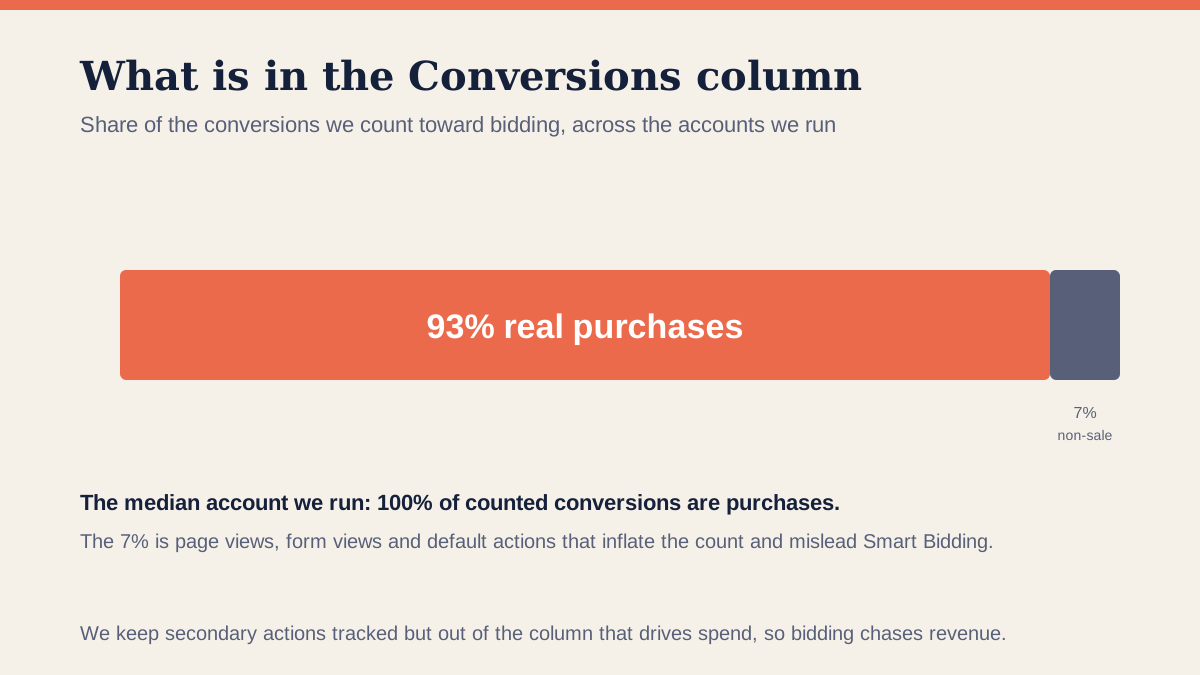
The core move. Across the accounts we run, 93% of counted conversions are purchases and the median account is at 100%, because the primary set holds only sales. The 7% that is not a sale, lead forms at 2.7%, page views at 2.3%, default actions at 1.6%, is exactly what we keep demoting out of the bidding column.
b One sale, counted once
Double-counting is the quieter pollutant. The same purchase firing from two tags, or a thank-you page a buyer refreshes, inflates the count without adding a sale. We set counting to one per click for purchases, deduplicate overlapping tags, and reconcile the total against the store's real orders, so a sale is a sale and not one-and-a-bit.
A clean count is not just the right actions; it is each real sale counted exactly once.
c Feed the value, not just the fact
A purchase is worth knowing; a purchase with its value attached is worth bidding on. Once the primary count is clean sales, we make sure each one carries its revenue, the bridge to Enhanced Conversions and value-based bidding. A clean count tells the algorithm what happened; the value tells it what it was worth.
A Conversions column that means one thing.
Across the accounts we run, 93% of the conversions counted toward bidding are real purchases, and the median account is at 100%. That is not a lucky sample; it is the outcome of treating the primary count as sacred and refusing to let vanity actions into it.
The payoff is that everything downstream can be trusted. ROAS means revenue over spend, not revenue over spend-plus-page-views. Smart Bidding optimizes toward sales. And value-based bidding has a clean signal to work from, instead of a count diluted by actions that never brought a dollar.
- The win is a conversion number you can bid on without a mental asterisk, because it only ever counts the money.
When hygiene pays, and when to rebuild first.
This work pays for any account on Smart Bidding, which is almost all of them now. The moment you let the algorithm set bids, the composition of the Conversions column decides what it optimizes toward, so a clean primary set is the difference between chasing revenue and chasing clicks.
If the tracking is not just polluted but broken, missing sales, firing on the wrong pages, values absent, then this is part of a full measurement rebuild, not a tidy-up. You cannot sort the primary set until the events underneath it are trustworthy.
What to remember.
Smart Bidding chases exactly what you count, so the Conversions column is the most important setting in the account. Fill it with page views and form fills and the algorithm buys cheap actions; keep it to sales and it buys revenue.
The discipline is to keep only the money events primary and demote the rest to secondary. Across the accounts we run that holds the counted conversions at 93% purchases, 100% on the median account, which is what makes ROAS honest and value-based bidding possible.
- Every conversion action audited and sorted into sales versus signals
- Only real sales kept in the primary, bidding-facing count (93% purchases across the book, 100% on the median account)
- Double-counting removed so each sale is counted once and reconciled to real orders
- Purchase values attached so bidding can chase revenue, not just the fact of a conversion